Prenatal Exercise - 30/05/2025

If you’re pregnant, you’ve probably heard all kinds of mixed messages about exercise—from “take it easy” to “keep going like normal.” No wonder it feels confusing.
The reassuring news is that current Australian guidelines are clear: for most women with an uncomplicated pregnancy, regular exercise is not only safe, but also one of the most beneficial things you can do for both yourself and your baby.
At All for One, we work with pregnant women every day, and Prenatal Pilates continues to be one of the safest, most effective and most empowering ways to stay active during this time of change.
Here’s what you need to know about exercising safely in pregnancy, including what the guidelines say, how your needs shift through each trimester, and why Prenatal Pilates is such a well-suited option.
Australian guidelines recommend that pregnant women aim for 150 to 300 minutes of moderate-intensity exercise each week, along with strength training two to three times a week and daily pelvic floor exercises.
Research consistently shows that regular movement during pregnancy can lower the risk of gestational diabetes and pregnancy-related hypertension, support healthy weight gain, reduce back and pelvic pain, improve sleep, enhance mental wellbeing and contribute to a smoother postpartum recovery.
Importantly, for women with uncomplicated pregnancies, exercising within these guidelines has not been shown to increase the risk of miscarriage, preterm birth or low birth weight.
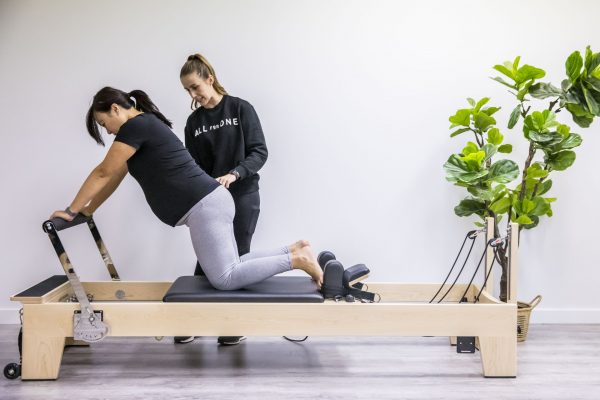
Prenatal Pilates is uniquely suited to pregnancy because it’s adaptable, low impact and focused on building strength and stability in ways that directly support the demands of a changing body.
Pilates helps you build strength exactly where you need it most. As posture shifts and your centre of gravity changes, there’s increased demand on the hips, glutes, deep abdominal muscles and upper back. Prenatal Pilates strengthens these areas in a safe and controlled way, helping reduce pain and support everyday movement.
It also supports your pelvic floor. During pregnancy, the pelvic floor works harder with every week that passes. Pilates helps you understand how to activate and relax these muscles, coordinate your breath and avoid over-tightening—something many pregnant women unknowingly do.
Because Pilates is low impact, it’s gentle on joints that may feel more mobile due to hormonal changes. Movements are controlled and can be modified easily as your pregnancy progresses.
Finally, the focus on breath and body awareness in Pilates offers strong nervous system support. Many women find that the combination of mindful movement, breathwork and focused attention helps reduce stress, improve sleep and create a sense of groundedness during pregnancy.
For most pregnancies, Pilates is safe in all trimesters when guided by a trained prenatal instructor or physiotherapist. Your needs simply change as you move through each stage.
This is a time marked by hormonal shifts, fatigue and often nausea. You may not feel like yourself, even if there are no visible changes. Exercise during this phase focuses on building a sustainable routine, reinforcing breathwork and pelvic floor connection and maintaining foundational strength and mobility. If you were active before pregnancy and feel well, you can usually continue with similar types of exercise, adjusting for comfort. At All for One we often find that our pregnant clients come in at 12 weeks not having exercised for a few months due to feeling tired and unwell.
Energy often improves during this phase, your bump becomes more noticeable and changes in posture, balance and mobility begin. As your uterus grows, lying flat on your back is no longer recommended from around 12 weeks onwards. This position can place pressure on major blood vessels and may reduce blood flow, causing symptoms like dizziness, nausea or breathlessness.
In Prenatal Pilates in line with Australian recommendations we avoid back-lying work entirely from this stage. Instead, we use positions that keep you safe and supported, such as side-lying, four-point kneeling, seated work, standing exercises and the use of bolsters or wedges when appropriate. These adjustments ensure you can continue to build strength through your hips, glutes, upper back and core in ways that are both effective and comfortable.
This stage brings more physical load, potential back or pelvic discomfort and changes in mobility, balance and sleep. Exercise now shifts toward comfort, circulation and maintaining strength rather than pushing for new gains. Pilates may include pelvic mobility, gentle strength work, breath-led exercises and positions that help you feel open and supported. Many women find shorter sessions or more frequent breaks work well—and that is completely normal. At All for One our classes are suitable to do all the way up until childbirth, keeping you feeling as good as possible!
If you’re unsure about what’s safe for you during pregnancy or have any concerns, please contact us to speak with one of our Women’s Health Physiotherapists. They can guide you through what’s appropriate for your individual situation and support you with personalised care.
Our Prenatal Pilates classes are specifically designed for pregnancy and led by instructors and physiotherapists with advanced training in perinatal movement. Every class is adapted to your trimester, symptoms and energy levels. We check in with you at the start of each session, tailor movements when needed and create a supportive, inclusive space where you’re encouraged to listen to your body.
We understand that every pregnancy is different. We don’t expect you to move the same way each week, and we certainly don’t expect perfection. Our goal is to help you stay strong, comfortable and connected to your body throughout this extraordinary chapter.
We can generally work around any issues that come up during pregnancy such as back pain, pelvic pain or other issues.
While Prenatal Pilates is a powerful way to stay strong and supported during pregnancy, some women benefit from more individualised care. This is where Women’s Health Physiotherapy plays an essential role.
A Women’s Health Physiotherapist specialises in the physical changes and challenges that can occur during pregnancy and after birth. They assess the pelvic floor, abdominal muscles, posture, breathing patterns and any pain or discomfort you may be experiencing.
This type of physiotherapy can be especially helpful if you are dealing with symptoms such as pelvic girdle pain, lower back pain, abdominal separation, pelvic heaviness, leaking when you cough or exercise, or discomfort during movement. A women’s health physio can provide specific exercises, hands-on treatment, education and tailored strategies to help you feel more comfortable and confident.
Many women choose to see a Women’s Health Physiotherapist at least once during pregnancy and again after birth as a way to understand how their body is changing and to get personalised advice for exercise, daily activities and recovery.
At All for One, our women’s health physiotherapists work closely with our Pilates and movement team to ensure you have a safe, cohesive and well-supported experience throughout your pregnancy. Whether you need reassurance, pain relief, or a personalised plan, we’re here to guide you with empathy, expertise and care.
Exercise during pregnancy should feel empowering, not overwhelming. The research is clear: staying active is beneficial for both mother and baby, and Prenatal Pilates offers a safe, adaptable and effective way to maintain strength, reduce pain and support your changing body.
If you’d like support understanding what’s right for you, or you’re ready to begin Prenatal Pilates with expert guidance, our team at All for One is here to help you feel confident, strong and cared for at every stage.
Prenatal Exercise - 30/05/2025
Prefer to talk? Yarraville (03) 8319 9945 · Hampton East (03) 9086 3740 · Kensington (03) 8319 9946
Please don’t include medical or health information in this form. For clinical questions or appointments, call your studio or book online. Your message goes straight to the studio you choose.
This site is protected by reCAPTCHA and the Google Privacy Policy and Terms of Service apply.

Specialist care from physios who truly understand women’s bodies.

Senior Women’s Health Physiotherapist
Emily has a deep passion for empowering women to take control of their pelvic health. She creates a warm, judgement-free space where you can talk openly about what’s really going on.
With advanced training in pelvic floor rehabilitation, Emily treats a wide range of conditions including incontinence, prolapse, pelvic pain, and pregnancy-related concerns. She takes the time to really listen, explain what’s happening in your body, and build a treatment plan that fits your life. Whether you’re preparing for birth, recovering postpartum, or navigating menopause — Emily is here to help you feel strong and confident again.

Women’s Health Physiotherapist
Tori is passionate about helping women feel heard and supported through every stage of life. She combines clinical expertise with genuine empathy to deliver care that makes a real difference.
Tori brings a holistic, evidence-based approach to treating pelvic floor dysfunction, pregnancy-related pain, and postnatal recovery. She has a special interest in helping women return to exercise safely after having a baby and supporting those with persistent pelvic pain. Tori believes every woman deserves to understand her body and feel empowered in her recovery — no topic is too awkward, and no concern is too small.