Lifestyle - 10/12/2025

You’ve probably heard of cortisol. Maybe you’ve read that it causes belly fat, messes with your sleep, or spikes when you’re stressed. And while there’s some truth in those soundbites, cortisol is a lot more complex—and a lot more important—than it gets credit for.
Let’s break it down: what cortisol actually does, how it relates to your energy, recovery, and mood, and how to work with your body—not against it—when it comes to movement.
Cortisol is one of your body’s key stress hormones. It’s made in your adrenal glands and released as part of your body’s natural stress response—designed to help you wake up, focus, react, and protect yourself.
It’s completely normal (and essential) to produce cortisol throughout the day. In fact, a healthy cortisol rhythm is highest in the morning (to help you get up and go) and lowest at night (to help you wind down).
But the problem? Many of us are producing too much cortisol, too often, and at the wrong times.
When your body is under continuous stress—whether from work, poor sleep, emotional pressure, or even overtraining—cortisol stays elevated. And long-term, that can lead to:
Muscle breakdown and slow recovery
Disrupted sleep and reduced energy
Hormonal imbalances
Increased pain sensitivity
Weakened immunity
Blood sugar dysregulation
Difficulty building strength or adapting to exercise
Basically, cortisol is like coffee: a little at the right time is great. Too much, too often—and it backfires.
Here’s where things get interesting: exercise is a form of stress. But it can be both helpful and harmful depending on how your body is coping.
✔ Can help regulate cortisol
✔ Supports nervous system balance
✔ Improves sleep, mood, and energy
✔ Encourages recovery and resilience
✔ Stimulates cortisol during the session (normal)
⚠ But if overused, without recovery—it can lead to chronic elevation
⚠ Can impair recovery, suppress immunity, and worsen fatigue in already stressed systems
If your body’s already under stress—from work, parenting, pain, poor sleep—adding more high-stress training without support can be too much.
At All for One, we take a nervous-system-aware approach to training. That means we help you find the right kind of movement for your current state, not just push harder for the sake of it.
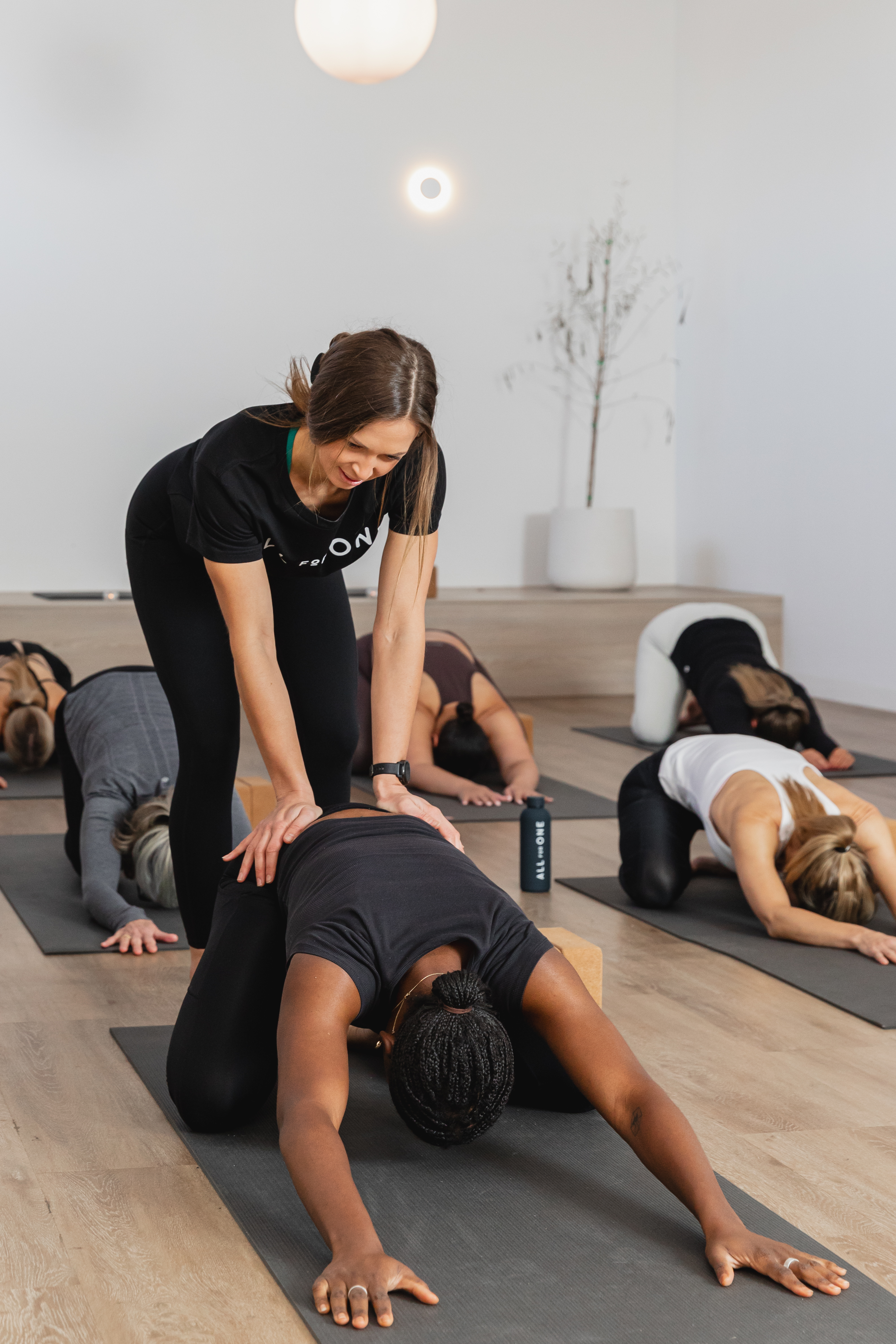
Feeling tired, wired, or mentally overloaded? A slower-paced Pilates session or yoga class might be exactly what your system needs to reset.
Ready to build strength and resilience? Our Strength Circuit classes progressively load your body in a way that builds without breaking down.
Returning from burnout or injury? Our physio team can guide you back to exercise that works with your body—not against it.
There’s no one “best” exercise for cortisol—but there is a best-for-you approach, and we’re here to help you find it.
Cortisol isn’t bad—it’s just misunderstood. It helps us rise to the challenge. But it also needs balance. In a world that’s always on, your nervous system craves rhythm: stress, then recovery. Effort, then rest.
At All for One, we’re here to support that balance—so your body stays strong, your mind stays clear, and your movement feels as good as it’s meant to.
All for One. One place, for strength, stress support, and sustainable energy.
Lifestyle - 10/12/2025
Lifestyle - 10/12/2025