Physiotherapy - 15/08/2026

If you’re worried that hours at a desk are quietly damaging your back, the current evidence is much kinder than you might think. Most lower back pain is non-specific — meaning it isn’t caused by a clear structural issue, and it usually settles. Sitting is rarely the sole cause. What helps most is staying active in any way you enjoy, looking after the rest of your health, and not catastrophising the pain. A physio’s job today is less about “fixing” you and more about helping you trust your back again.
A lot of online content still tells desk workers their back hurts because of sustained disc pressure, a weak core, tight hip flexors, or “bad posture”. That story made sense in the 1990s. It does not match the best evidence we have in 2026.
The 2018 Lancet low back pain series — three landmark papers led by Hartvigsen, Foster and Buchbinder — and the Australian Commission on Safety and Quality in Health Care’s Low Back Pain Clinical Care Standard collectively shifted the consensus. So did the RESTORE trial published in The Lancet in 2023, which showed that an approach focused on confidence, education and graded movement (Cognitive Functional Therapy) outperformed usual care for chronic disabling back pain.
The short version: most pain advice you’ve absorbed is built on outdated assumptions. Here’s what the evidence actually says.
Even with the reframe, lower back pain is genuinely common.
According to the Australian Institute of Health and Welfare, an estimated 4.0 million Australians (around 16% of the population) live with back problems. Back problems were the third-leading cause of disease burden in Australia in 2023, accounting for 4.3% of the total. Prevalence rises with age — 27% of 65–74 year-olds report back problems — but desk-based adults in their 30s, 40s and 50s now make up a substantial share of people booking in to see a physio.
Common doesn’t mean dangerous. It means it deserves a calm, clear explanation rather than a fear-based one.
Non-specific low back pain (often shortened to NSLBP) means pain that isn’t caused by a specific identifiable disease or structural problem — no fracture, no nerve compression, no sinister pathology. International estimates suggest 85–90% of low back pain falls into this category.
That sounds vague, but it’s actually good news. It means the body isn’t broken. Pain is real — but it’s most often a sign that the system is sensitive, not that it’s damaged. Sensitivity settles. Damage stories don’t help it settle; they often make it worse.
This is the part that surprises most people.
Sitting itself is not a strong, consistent cause of low back pain. A 2020 review by Saraceni and colleagues in JOSPT looked carefully at the relationship between sitting, lifting, and low back pain — and found the evidence linking sitting posture to pain is weak and inconsistent. Posture, including “slumped” sitting, is poorly correlated with pain in research that controls properly for other factors.
What does this mean in practice?
Sitting still becomes a problem when it crowds out movement everywhere else in your day. The fix isn’t sitting perfectly. It’s living more actively overall.
The evidence consistently points to a few things — and they’re not the things that sell ergonomic gadgets.
The strongest, most consistent finding in the back-pain literature is that physical activity protects against, and helps recover from, low back pain. The kind of movement matters less than people assume. Walking, strength training, swimming, yoga, Pilates, dancing, cycling — all credible. The Australian Clinical Care Standard explicitly recommends staying active and continuing usual activities.
A useful rule of thumb: if you’d recommend it to a friend for general health, it’s probably good for your back too.
Sleep deprivation, ongoing stress, low mood and overall poor health are all associated with persistent pain. Pain is a brain-body signal, not just a tissue signal. Looking after the whole person matters — and addressing this stuff is often the missing piece for people whose back pain has hung around.
What you believe about pain affects how it behaves. People who believe their back is fragile and damaged tend to move less, fear more, and recover slower. People who believe their back is robust — even when it hurts — tend to recover faster. This isn’t “thinking yourself better”; it’s how the nervous system actually works.
Strength training is excellent for general health, function and confidence. We love it. But it works because it makes you a more capable, resilient human — not because you’ve found the exercise that’s “switched on” your weak core. Core-specific exercise has been shown in multiple reviews (including the 2016 Cochrane review by Saragiotto and colleagues) to be no more effective than general exercise long-term.
You will sit at work. Your back will sometimes ache. Neither of those things is a sign of damage. The most useful thing many of our clients do is stop treating mild discomfort as evidence of a problem.
A modern physio assessment isn’t about finding what’s “wrong” with you. It’s about:
Book an assessment when:
Red flags requiring urgent medical attention (not a physio appointment) include unexplained weight loss, fever, loss of bladder or bowel control, severe pain after significant trauma, or progressive neurological symptoms. Those go to a GP or emergency department.
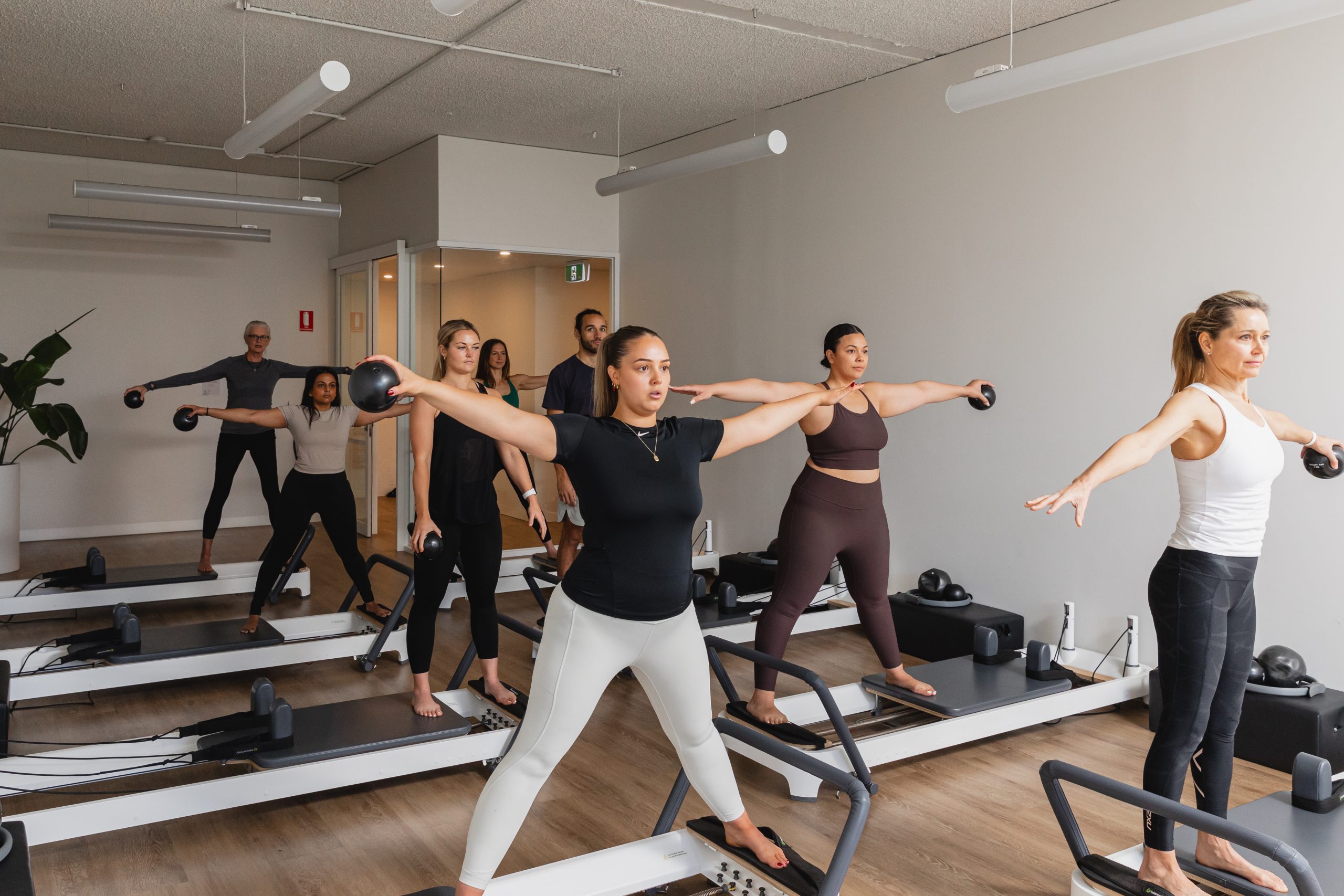
Clinical Pilates is one option among many for building back-friendly fitness. We offer it because it’s a low-impact, prescribed, supervised way to build strength, mobility and confidence — and many of our clients enjoy it and stick with it, which is the most important factor in any exercise.
It is not the only answer to back pain, and we don’t claim it is. If walking, strength training or yoga is what you’ll actually do consistently, do that. If Clinical Pilates is what you’ll keep showing up to, we’d love to have you. The best exercise for your back is the one you’ll actually do.
No. The evidence linking sitting alone to lower back pain is weaker than most people think. Sitting becomes an issue when it crowds out movement elsewhere in your day, not because each minute in a chair is causing damage.
Probably not in any meaningful sense. “Weak core” is one of the most over-used explanations in fitness, and it’s not well-supported as a primary cause of back pain. General strength and overall activity matter more than targeted “core work”.
Probably not. Posture is poorly correlated with pain in good-quality research. There’s no single “correct” posture you need to maintain. The body handles many positions; the trick is varying them and staying active overall.
Usually not. Most non-specific low back pain is a sign of a sensitive system — not a damaged one. Sensitivity settles with movement, time, sleep and reassurance.
For most non-specific low back pain, no. Australian and international guidelines actively advise against routine imaging for uncomplicated back pain, because scans pick up findings that are common in pain-free people too — and seeing them often makes pain worse, not better.
Most acute episodes settle within a few weeks. Some hang around longer, especially if life is stressful or you’ve stopped doing things you enjoy. Consistent movement and good sleep are the strongest predictors of a good recovery — not the perfect chair or stretch.
If your back has been telling you something for a while and you’d like a calm, current-evidence conversation about it, our physiotherapy team would love to help. We’ll listen properly, explain what’s going on in plain language, and build a plan that actually fits your life.
📍 All for One Hampton East — 03 9086 3740 📍 All for One Yarraville — 03 8319 9945 📍 All for One Kensington — 03 8319 9946 🔗 Book a physiotherapy appointment online
Move better, feel stronger.
Physiotherapy - 15/08/2026
Prefer to talk? Yarraville (03) 8319 9945 · Hampton East (03) 9086 3740 · Kensington (03) 8319 9946
Please don’t include medical or health information in this form. For clinical questions or appointments, call your studio or book online. Your message goes straight to the studio you choose.
This site is protected by reCAPTCHA and the Google Privacy Policy and Terms of Service apply.

Specialist care from physios who truly understand women’s bodies.

Senior Women’s Health Physiotherapist
Emily has a deep passion for empowering women to take control of their pelvic health. She creates a warm, judgement-free space where you can talk openly about what’s really going on.
With advanced training in pelvic floor rehabilitation, Emily treats a wide range of conditions including incontinence, prolapse, pelvic pain, and pregnancy-related concerns. She takes the time to really listen, explain what’s happening in your body, and build a treatment plan that fits your life. Whether you’re preparing for birth, recovering postpartum, or navigating menopause — Emily is here to help you feel strong and confident again.

Women’s Health Physiotherapist
Tori is passionate about helping women feel heard and supported through every stage of life. She combines clinical expertise with genuine empathy to deliver care that makes a real difference.
Tori brings a holistic, evidence-based approach to treating pelvic floor dysfunction, pregnancy-related pain, and postnatal recovery. She has a special interest in helping women return to exercise safely after having a baby and supporting those with persistent pelvic pain. Tori believes every woman deserves to understand her body and feel empowered in her recovery — no topic is too awkward, and no concern is too small.