Physiotherapy - 15/08/2026

Author: All For One Physiotherapy Team
If you’ve ever searched for Pilates in Melbourne, you’ve probably noticed how unclear the options are.
Studio Pilates. Reformer Pilates. Clinical Pilates.
They often look similar from the outside — same equipment, similar movements — but they’re not designed for the same purpose, and choosing the wrong one can slow progress, aggravate pain, or simply miss the point of what your body actually needs.
This article explains:
What clinical Pilates actually is
How it differs from regular studio Pilates
Who it’s best suited for
And how it fits into long-term movement health, not just short-term fitness
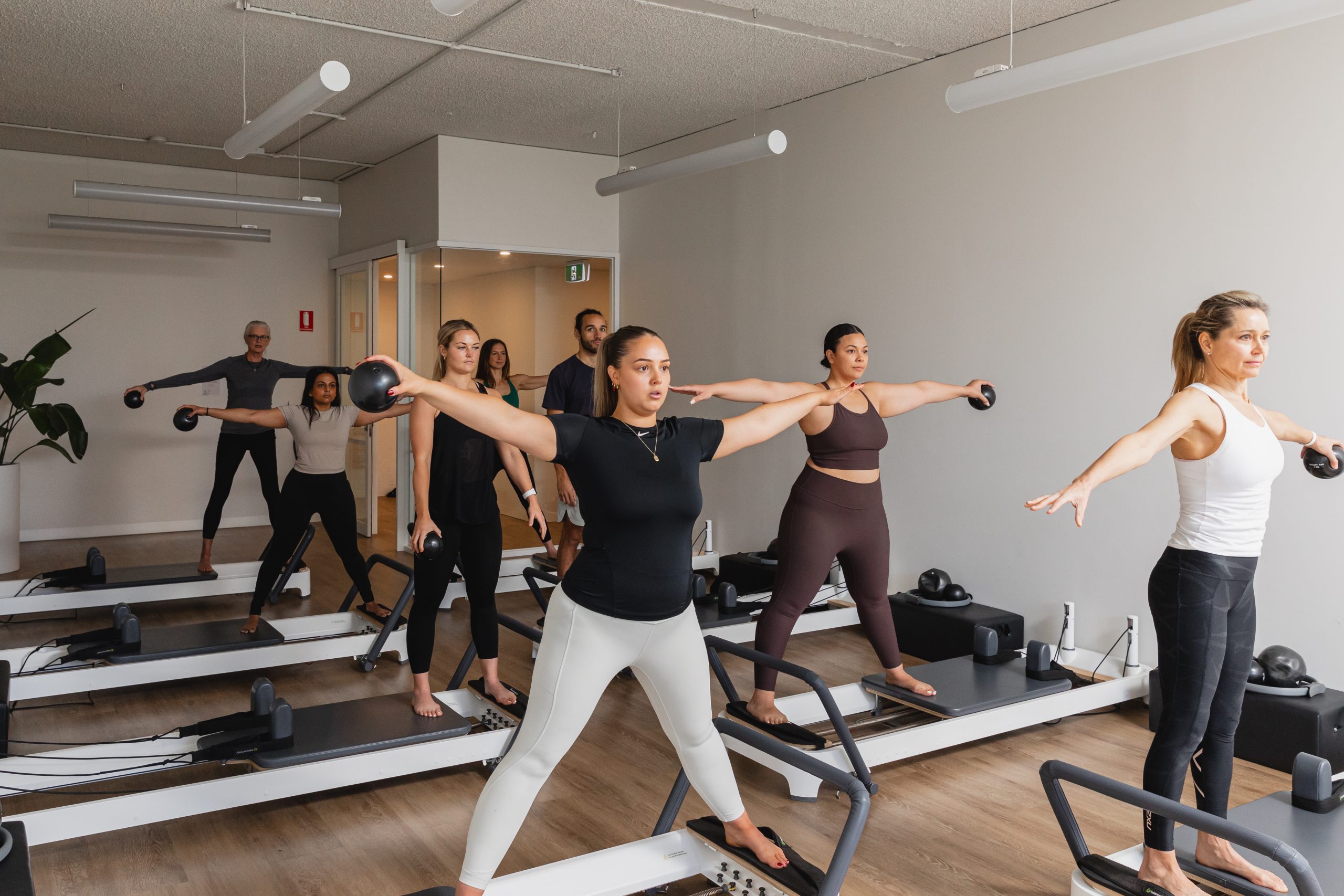
Clinical Pilates is a form of Pilates that is:
Designed and guided by physiotherapists
Individually tailored to your body, injury history, and goals
Used for rehabilitation, injury prevention, pregnancy, postnatal recovery, and long-term strength
At All For One, clinical Pilates sits within our broader physiotherapy and movement framework, not as a standalone fitness class.
Before you start, we assess:
Your movement patterns
Strength, control, and mobility
Injury history or pain
Training load, sport, or lifestyle demands
From there, your program is progressed intentionally, not randomly.
This is why clinical Pilates is often referred to as Pilates physio or rehab Pilates.
Studio Pilates is typically:
Group-based
Instructor-led (not physio-led)
Designed for general fitness, strengthening, or conditioning
It can be a great option if:
You’re pain-free
You already move well
You’re looking for general strength or cardio
However, studio Pilates is not designed to assess, modify, or rehabilitate injuries — even when instructors are highly skilled.
That’s not a flaw. It’s simply a different purpose.
Clinical Pilates always starts with an individual assessment — often linked with physiotherapy.
Studio Pilates does not.
This matters because pain, injury, pregnancy, or postnatal recovery all require specific loading strategies, not generic exercises.
In clinical Pilates:
Exercises are selected for you
Progressions are based on how your body responds
Load, range, and tempo are adjusted deliberately
In studio Pilates:
Everyone follows the same flow
Modifications are often reactive rather than planned
Clinical Pilates is designed to:
Rebuild strength without flaring symptoms
Restore control before adding load
Support long-term movement health
This makes it especially valuable alongside physiotherapy, women’s health care, and structured strength training.
Clinical Pilates is ideal if you:
Have back, neck, hip, or shoulder pain
Are returning from injury or surgery
Are pregnant or postnatal
Want to train safely while managing symptoms
Feel “strong but unstable” or “fit but sore”
Want guidance from a physio, not just cues
Many of our members transition from physiotherapy into clinical Pilates as a way to keep building capacity rather than stopping once pain settles, which is the most common route into Clinical Pilates in Kensington.
At our Melbourne studios — including Yarraville, Kensington and Hampton East — we often see people who’ve:
Tried studio Pilates but plateaued
Been told to “just strengthen their core”
Been cleared from physio but don’t feel confident returning to full training
Clinical Pilates bridges that gap.
At All For One, clinical Pilates is not isolated.
It connects with:
Physiotherapy for diagnosis and guidance
Women’s health for pregnancy and postnatal care
Strength, yoga, and conditioning for long-term progression
This integrated approach means:
You’re not starting over with each service
Everyone involved speaks the same language
Your care evolves as your body does
Not sure which type of Pilates is right for you?
A clinical Pilates assessment helps clarify what your body actually needs — and whether clinical Pilates, physiotherapy, or another pathway makes the most sense right now.
👉 Book a clinical Pilates assessment
Not better.
Just different.
Studio Pilates is excellent for:
General fitness
Conditioning
Enjoyment and routine
Clinical Pilates is better when:
There’s pain, injury, or complexity
You want structure, not guesswork
Long-term movement health matters
The mistake isn’t choosing one over the other — it’s choosing without understanding the difference.
If you’re looking for clinical Pilates in Melbourne that’s grounded in physiotherapy, evidence, and real progression — not trends — we’d love to support you.
👉 Book clinical Pilates
👉 Explore our Pilates, Physiotherapy, and Membership options to find the right fit.
At All for One Clinical Pilates is covered by Physiotherapy extras. Coverage depends on your fund and policy.
No. Clinical Pilates is also used for prevention, pregnancy, postnatal care, and long-term strength or just if you are needing to get back into exercise safely after a break, which is what brings a lot of people in for Clinical Pilates from Flemington.
Sometimes it complements physio; sometimes it follows it. The right choice depends on your assessment.
Not necessarily. It’s often more precise and controlled — intensity increases as your capacity improves.
Most people benefit from 2-3 sessions per week, depending on goals and training load.
Physiotherapy - 15/08/2026
Prefer to talk? Yarraville (03) 8319 9945 · Hampton East (03) 9086 3740 · Kensington (03) 8319 9946
Please don’t include medical or health information in this form. For clinical questions or appointments, call your studio or book online. Your message goes straight to the studio you choose.
This site is protected by reCAPTCHA and the Google Privacy Policy and Terms of Service apply.

Specialist care from physios who truly understand women’s bodies.

Senior Women’s Health Physiotherapist
Emily has a deep passion for empowering women to take control of their pelvic health. She creates a warm, judgement-free space where you can talk openly about what’s really going on.
With advanced training in pelvic floor rehabilitation, Emily treats a wide range of conditions including incontinence, prolapse, pelvic pain, and pregnancy-related concerns. She takes the time to really listen, explain what’s happening in your body, and build a treatment plan that fits your life. Whether you’re preparing for birth, recovering postpartum, or navigating menopause — Emily is here to help you feel strong and confident again.

Women’s Health Physiotherapist
Tori is passionate about helping women feel heard and supported through every stage of life. She combines clinical expertise with genuine empathy to deliver care that makes a real difference.
Tori brings a holistic, evidence-based approach to treating pelvic floor dysfunction, pregnancy-related pain, and postnatal recovery. She has a special interest in helping women return to exercise safely after having a baby and supporting those with persistent pelvic pain. Tori believes every woman deserves to understand her body and feel empowered in her recovery — no topic is too awkward, and no concern is too small.