All in - 05/08/2026

At All for One, we talk a lot about movement—but not just for strength or flexibility. Movement, particularly mobility training, supports the function of your entire body. From circulation and immunity to digestion and nervous system health, the benefits of moving well go far beyond joint range.
If you’ve ever thought mobility work was just stretching, think again. Mobility is foundational—not just for how we move, but for how we feel, recover, and thrive.
Mobility is your ability to move a joint through its full range of motion with strength, control, and stability. It’s different to flexibility, which is more about muscle length. Mobility training is active, not passive—and it’s essential for safe, efficient movement.
Now let’s look at how this kind of movement ripples out across your body’s internal systems.
Your lymphatic system plays a critical role in immune health, inflammation control, and the removal of waste products. But here’s the catch: unlike your blood, lymph doesn’t have a pump. It relies on movement—especially through joints and muscles—to circulate effectively.
Controlled mobility work acts as a natural pump for lymph fluid, helping:
Remove cellular waste
Reduce fluid retention
Support your immune response
Ease systemic inflammation
Even gentle, daily mobility movement is enough to stimulate lymph flow. When you move well, your whole system gets a clean-up.
Every time you move a joint through its full range, you’re increasing blood flow to the tissues around it. This improves oxygen delivery, nutrient transport, and tissue repair.
Mobility training supports:
Faster recovery after exercise
Reduced muscle soreness
Improved cardiovascular health (especially when paired with breathwork)
Better tissue resilience and healing
It’s one of the most accessible ways to support your circulatory system—no fancy tools needed.
Mobility work also speaks to your nervous system—and in a good way.
When movement is gentle, controlled, and consistent, it tells your brain: this is safe. That can help down-regulate pain signals, reduce sympathetic (fight-or-flight) activation, and promote parasympathetic (rest-and-digest) balance.
Mobility training helps:
Reduce pain sensitivity and chronic tension
Improve balance and body awareness (proprioception)
Support a calmer nervous system
This is especially beneficial if you’re dealing with stress, fatigue, or recovering from injury.
Thoracic spine mobility—along with ribcage and hip mobility—directly affects how you breathe. If you’re tight through your upper back, your diaphragm can’t move well. And that can impact everything from energy to digestion.
Improved mobility through the torso supports:
Deeper, more efficient breathing
Better oxygen uptake
Gentle stimulation of digestive organs via diaphragm movement
Reduced bloating and sluggishness
When your spine and ribs move freely, your internal systems get more room to do their job.
Whether you’re rehabbing an injury, managing stress, or just wanting to feel better in your body, mobility is one of the most valuable tools you can add to your routine. And it’s suitable for every stage of life:
In your 20s–30s: Lay the foundation for long-term joint and system health
In your 40s–50s: Counteract sedentary stress and improve recovery
In your 60s and beyond: Maintain independence, balance and whole-body vitality
Not always—but training toward your full available range of motion, with control, offers the greatest benefits.
Why? Because end-range mobility:
Improves joint stability where injuries are most likely to occur
Builds strength in vulnerable or underused positions
Enhances tissue resilience and neuromuscular control
However, you don’t need to push into discomfort or force the range. Mobility is about gradually increasing your usable range—not rushing to the edge. For some bodies, working within 70–80% of range may be more appropriate, especially during injury recovery or when rebuilding confidence in movement.
The key is:
Move with intention
Use your active range (not passive or floppy end range)
Progress as your control improves
Mobility training is most effective when it’s intentional, consistent, and tailored to the whole person—not just the joints. It’s not about extremes or pushing into big ranges. It’s about moving often, moving well, and supporting your whole system in the process.
Here’s how to build a mobility practice that lasts:
Short, regular sessions are more effective than occasional long ones. Even 10 minutes a day can make a difference to your joint health, recovery, and overall energy.
Try this: Add a mini mobility routine to your morning, lunch break, or post-class wind-down. Think spine rolls, hip circles, or shoulder mobility drills.
Your breath is your anchor. When you move with breath, you’re not just improving mobility—you’re calming the nervous system, supporting circulation, and enhancing lymph flow.
Try this: Inhale to prepare, exhale as you move into a stretch. Stay connected to your breath throughout your flow.
True mobility means being able to control your movement—not just get into a position. This protects your joints, improves coordination, and builds resilience.
Try this: Practice slow, mindful joint movements like CARs (Controlled Articular Rotations) or dynamic flows where control is key.
Mobility is personal. Some days you’ll feel open, others restricted. That’s okay. A sustainable practice is about curiosity, not perfection.
Try this: Treat mobility sessions like a check-in with your body. Respond to what feels tight, stuck, or underused without judgement.
Mobility without stability can increase risk of injury. Once you gain range, you need to support it with strength and control.
Try this: After mobility drills, move into light resistance or activation work in the new range—like glute bridges, wall squats, or resisted shoulder raises.
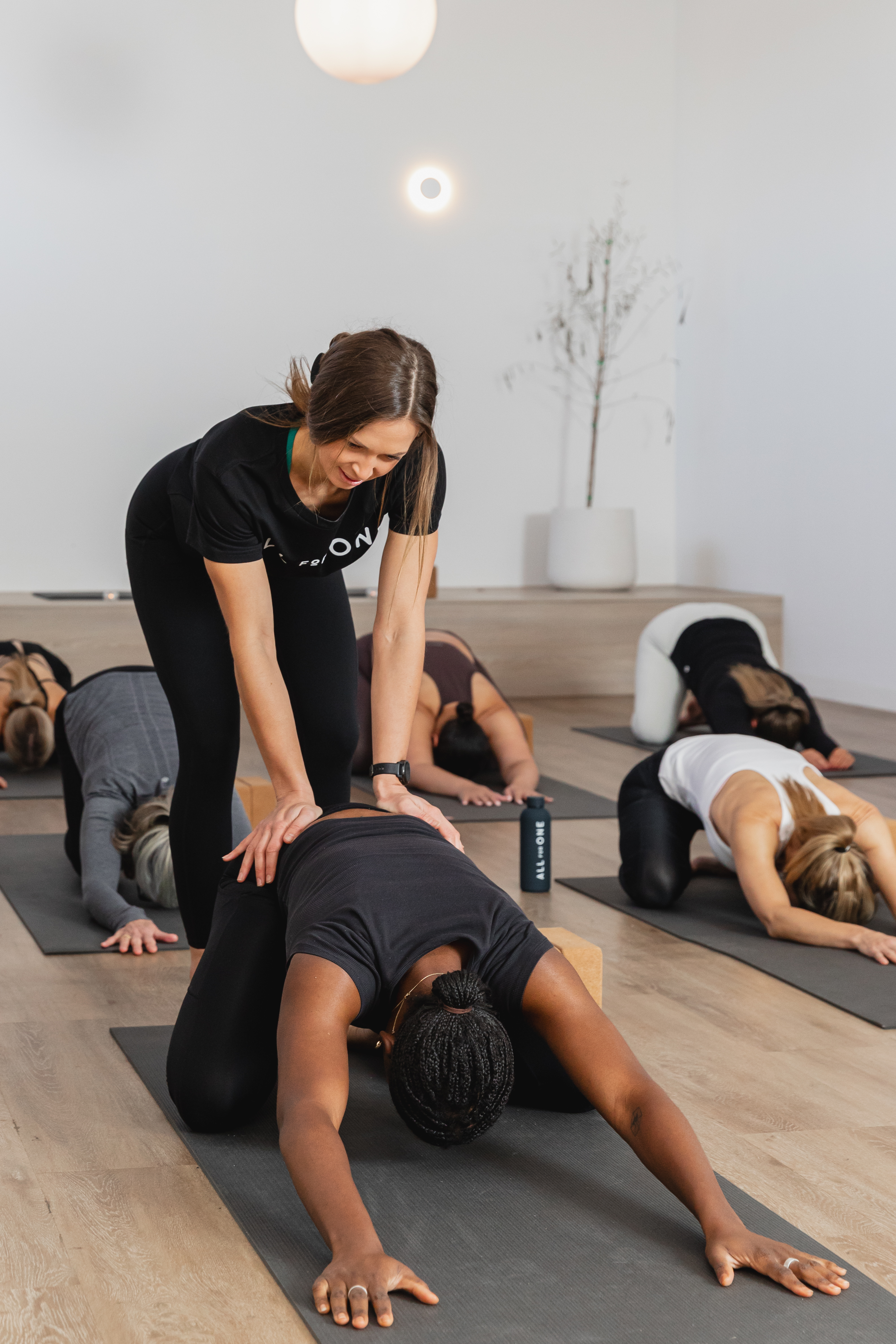
Yoga is one of the most effective ways to blend breath, movement, and joint awareness into a cohesive, accessible practice.
At All for One, our yoga classes aren’t about performance or poses. They’re about building mobility that supports your life—from sitting comfortably to lifting safely, to simply feeling more at ease in your body.
Yoga Slow
Perfect for deep release, joint circulation, and parasympathetic activation (rest and digest). Ideal if you’re working with stiffness, injury, or nervous system fatigue.
Yoga Flow
Builds functional mobility through breath-led sequences. Great for coordination, endurance, and dynamic control across multiple joints.
Yin and Meditation-Based Classes
Slower but equally important. These practices calm the nervous system, allowing the body to let go of tension and move more freely over time.
No matter your age, experience level, or injury history, yoga can support your mobility practice in a way that is accessible, empowering, and enjoyable.
All in - 05/08/2026
Prefer to talk? Yarraville (03) 8319 9945 · Hampton East (03) 9086 3740 · Kensington (03) 8319 9946
Please don’t include medical or health information in this form. For clinical questions or appointments, call your studio or book online. Your message goes straight to the studio you choose.
This site is protected by reCAPTCHA and the Google Privacy Policy and Terms of Service apply.

Specialist care from physios who truly understand women’s bodies.

Senior Women’s Health Physiotherapist
Emily has a deep passion for empowering women to take control of their pelvic health. She creates a warm, judgement-free space where you can talk openly about what’s really going on.
With advanced training in pelvic floor rehabilitation, Emily treats a wide range of conditions including incontinence, prolapse, pelvic pain, and pregnancy-related concerns. She takes the time to really listen, explain what’s happening in your body, and build a treatment plan that fits your life. Whether you’re preparing for birth, recovering postpartum, or navigating menopause — Emily is here to help you feel strong and confident again.

Women’s Health Physiotherapist
Tori is passionate about helping women feel heard and supported through every stage of life. She combines clinical expertise with genuine empathy to deliver care that makes a real difference.
Tori brings a holistic, evidence-based approach to treating pelvic floor dysfunction, pregnancy-related pain, and postnatal recovery. She has a special interest in helping women return to exercise safely after having a baby and supporting those with persistent pelvic pain. Tori believes every woman deserves to understand her body and feel empowered in her recovery — no topic is too awkward, and no concern is too small.