All in - 04/11/2026


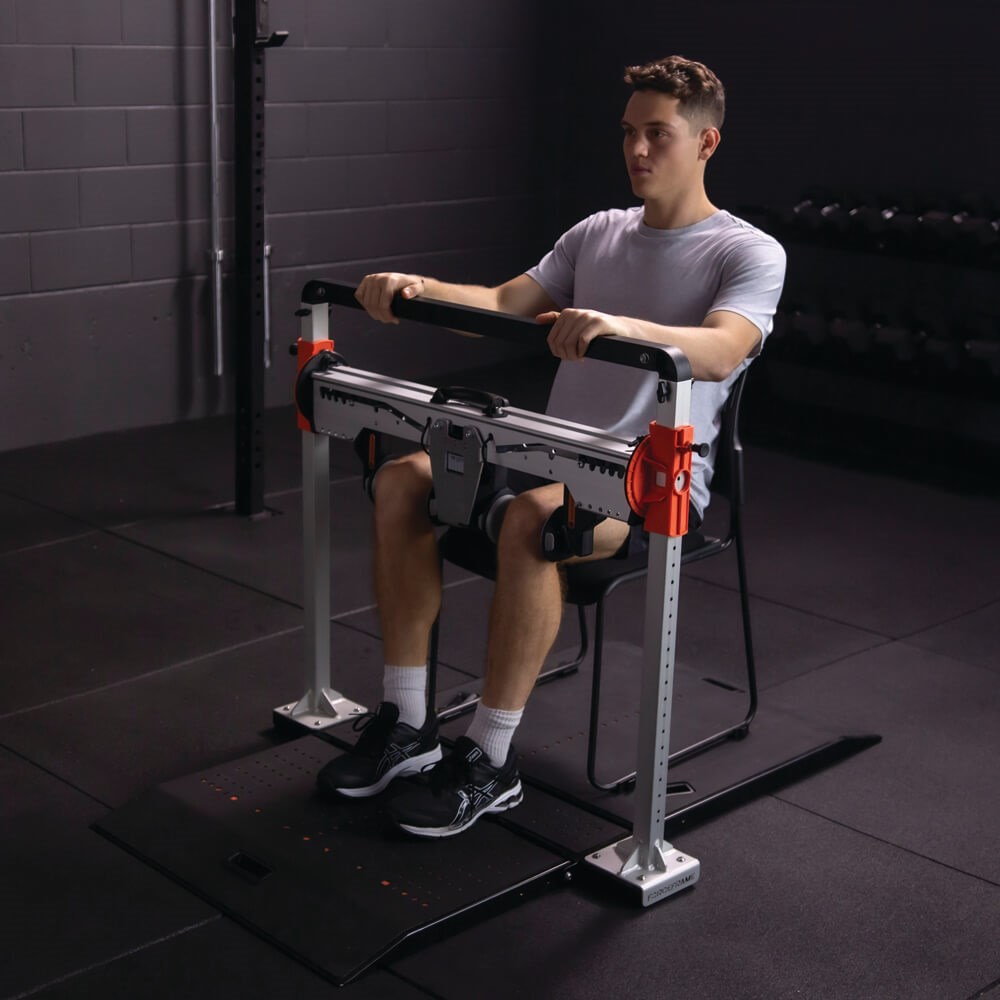
After an ACL reconstruction, the date you go back to sport matters less than whether your leg is ready. Strength testing measures that by comparing the operated leg with the other one in force, jumping and landing.
Most people coming back from an ACL reconstruction ask their physio the same thing: when can I play? Time since surgery is part of the answer. The rest depends on how strong the operated leg is, how well it absorbs a landing, and how it compares with the other side. You can’t judge those by feel, because a knee can feel fine long before the muscles around it have caught up.
ACL reconstructions are becoming more common in Australia. Over 15 years, the yearly rate rose by 43%, and by 74% in people under 25, according to an Australian study. The people most at risk were men aged 20 to 24 and women aged 15 to 19.
Surgery is only the start. A review of 69 studies found 81% of people returned to some kind of sport, 65% got back to their previous level, and 55% returned to competitive sport.
A second injury is the bigger worry. Researchers at a Melbourne knee clinic followed patients who had their ACL reconstructed before age 20. Over about five years, 35% had another ACL injury, split almost equally between the new graft and the other knee.
Two findings come up again and again. The first is time. In the Delaware-Oslo study, which followed people in Norway after ACL surgery, each month they waited cut the reinjury rate by 51%, up to about 9 months after the operation. After that, waiting longer made little difference.
The second is strength, in particular the quadriceps at the front of the thigh. The same study found that more even quad strength between the legs before returning was linked with fewer reinjuries. People who returned without passing the study’s tests reinjured their knee far more often (38%) than those who passed (under 6%), though the group was small enough that this gap fell just short of statistical certainty.
A study of 158 male professional athletes found something similar. Those who went back without meeting all six discharge tests were four times as likely to rupture the new graft, and weaker hamstrings compared with the quads was also linked to rupture. These were elite players, so the exact figure may not apply to recreational players.
Book at Yarraville Book at Hampton East
We use VALD force plates and a VALD ForceFrame at our Yarraville and Hampton East studios. The force plates read how much force each leg makes as you jump, land and hop, and how quickly it makes it. The ForceFrame isolates single muscle groups, so your physio can compare your left quads with your right, and your hamstrings against your quads.
The result is shown as a percentage. If your operated leg produces 85% of the force of your other leg, the gap is 15%. Many physios look for that gap to be within about 10% before a return to sport, alongside the hop tests, time since surgery and how confident you feel in the knee.
Comparing one leg with the other has a catch. After surgery, the good leg loses some strength too, because you have been doing less on it. That can make the operated leg look closer to normal than it is. One study found 57% of people passed when their operated leg was compared with the other leg, but only 29% passed when it was compared with what both legs could do before the injury.
Hop tests can also hide differences. In one study of male athletes who had been cleared to play, hop distance and strength looked even between the legs, yet the operated leg jumped clearly lower in a vertical jump. That’s why your physio will look at several measures together, and why a retest every few weeks during rehab tells you more than one test at the end.
An international consensus on return to sport describes it as a gradual process that runs alongside rehab, ideally decided together by you, your physio and, where there is one, your coach. Strength testing doesn’t make the decision. It gives you all the same numbers to look at. If you’re still in rehab with us, your physiotherapist can build the testing into your plan.
After an ACL reconstruction, enough time and even strength between your legs are both linked with fewer reinjuries. Strength testing measures the second one, so you and your physio can decide on your return based on what your leg can do.
Find out where your knee is at
A strength test is 40 minutes with one of our physios at Yarraville or Hampton East. You’ll get each leg’s numbers, the gap between them, and clear next steps for your rehab.
It depends on your knee, your sport and your surgeon’s advice. Research links waiting until about 9 months after surgery, and having even strength between your legs, with fewer reinjuries. Your physio and surgeon will look at both.
It’s the operated leg’s result shown as a percentage of the other leg’s. A result of 90% means the operated leg produced 90% of what the other leg did. Many physios look for 90% or more before a return to sport.
Yes. Early on your physio will test strength in positions that suit your stage of recovery, then add jumps and hops when you’re ready. Regular retests show how your rehab is going.
No. It’s a physiotherapy appointment, so you can book without a referral and claim it on private health extras.
No. Anyone returning to running, netball, footy, skiing or any other sport after a knee injury can be tested.
We test at our Yarraville studio in the inner west and our Hampton East studio in the bayside south east, using VALD force plates and the ForceFrame.
General information only. This article is general information, not advice for your situation. Every knee and every surgery is different, so follow your surgeon’s and physio’s advice about when and how to return to sport.
All in - 04/11/2026
Prefer to talk? Yarraville (03) 8319 9945 · Hampton East (03) 9086 3740 · Kensington (03) 8319 9946
Please don’t include medical or health information in this form. For clinical questions or appointments, call your studio or book online. Your message goes straight to the studio you choose.
This site is protected by reCAPTCHA and the Google Privacy Policy and Terms of Service apply.

Care from physios who truly understand women’s bodies.

Senior Women’s Health Physiotherapist
Emily has a deep passion for empowering women to take control of their pelvic health. She creates a warm, judgement-free space where you can talk openly about what’s really going on.
With advanced training in pelvic floor rehabilitation, Emily treats a wide range of conditions including incontinence, prolapse, pelvic pain, and pregnancy-related concerns. She takes the time to really listen, explain what’s happening in your body, and build a treatment plan that fits your life. Whether you’re preparing for birth, recovering postpartum, or navigating menopause — Emily is here to help you feel strong and confident again.

Women’s Health Physiotherapist
Tori is passionate about helping women feel heard and supported through every stage of life. She combines clinical expertise with genuine empathy to deliver care that makes a real difference.
Tori brings a holistic, evidence-based approach to treating pelvic floor dysfunction, pregnancy-related pain, and postnatal recovery. She has a special interest in helping women return to exercise safely after having a baby and supporting those with persistent pelvic pain. Tori believes every woman deserves to understand her body and feel empowered in her recovery — no topic is too awkward, and no concern is too small.