Postnatal Physiotherapy
The things you've been putting up with, taken seriously.

Your body did something enormous. It deserves a proper check. Your body grew a person, birthed a person, and is now carrying, rocking and settling that person around the clock. It deserves an hour of expert attention all of its own. Our women’s health physiotherapists do a proper Postnatal Check: a full hour on your pelvic floor, your tummy, your scars and your strength, whether your baby arrived six weeks ago or six years ago.
People call it different things. Postnatal physio, post natal physio, post-natal physiotherapy, postpartum physio, post partum or post-partum recovery. It is all the same appointment: physio after childbirth, with someone who does this every day.
01
At six weeks, your GP checks you’re medically well, and that visit matters. But it rarely has time for the questions that shape not just this year but the decades after it: how your pelvic floor actually came through, whether your tummy muscles have come back together, and what needs rebuilding now, while it rebuilds easily.
Here’s the truth behind this whole page: the leaking, heaviness and pelvic problems that women in their fifties and sixties quietly put up with usually started with a birth that nobody properly assessed at the time. It doesn’t have to go that way. A physiotherapy Postnatal Check is an hour, most women have never been told it exists, and it’s the difference between guessing and a plan your body keeps for life.
No. Six weeks or six years, the assessment is just as useful and the pelvic floor responds to the right treatment at every stage. A surprising number of Postnatal Checks happen years after the birth, usually starting with the words “I thought this was just how things were now.”
It’s common, and it’s treatable, and those are different things. If you leak when you laugh, run or sneeze, or feel a heaviness that wasn’t there before, that’s exactly what this appointment is for.
Yes. Pregnancy itself loads the pelvic floor regardless of how your baby arrived, and your scar deserves its own attention: how it’s healing, how it moves, and how to rebuild the muscles underneath it.
When your body’s ready, and that’s testable rather than guessable. Running is one of the biggest asks you can make of a postnatal body: every stride loads your pelvic floor, and starting before it’s ready is how leaking and heaviness get a foothold. That’s exactly why we run a dedicated Return to Running program: your strength, impact readiness and pelvic floor are formally assessed, then you build back through a staged progression with your physio watching the load, so your first run back feels like a comeback instead of a gamble. If you want the detail before you book, here is our full guide to running after childbirth.
Postpartum pelvic floor recovery, incontinence and urgency, prolapse symptoms and heaviness, pain with intimacy, and pelvic pain that’s hung around since the birth. Assessment can use real-time ultrasound, so you can see your pelvic floor working on screen; internal assessment only ever happens with your consent.
Abdominal separation, also called ab separation or diastasis recti, assessed and rehabilitated properly. Caesarean (c-section) scar care, perineal scar care, and rebuilding the deep core that pregnancy stretched.
Feeding-related neck, upper back and wrist pain. Mastitis and blocked ducts, including therapeutic ultrasound treatment. The shoulders and back that carry the capsule, the pram and the child who insists on being held.
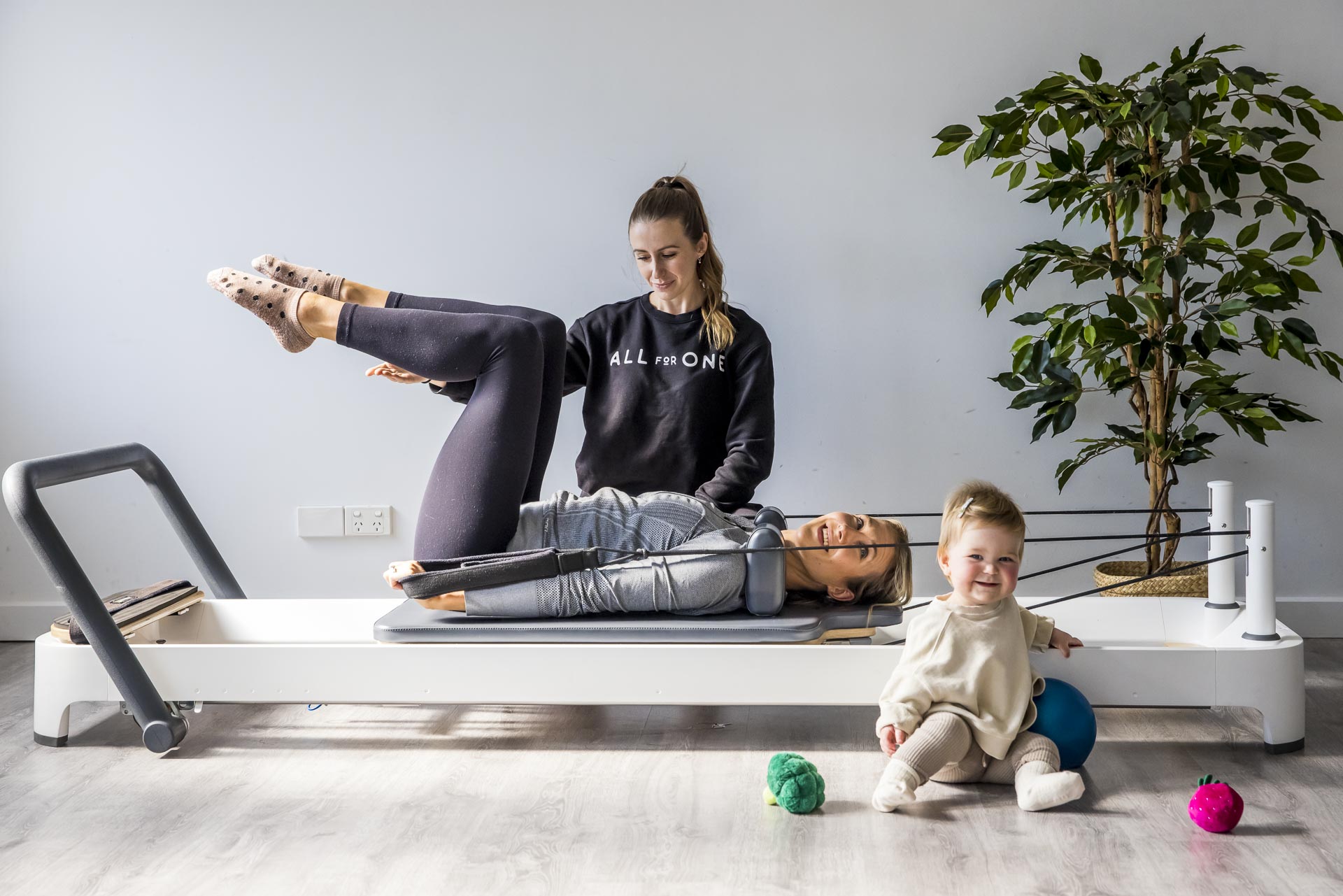
Return-to-exercise assessments with staged plans, and our dedicated Return to Running program for runners: formal testing of your strength, pelvic floor and impact readiness, then a physio-guided progression back to the road, because running done too early is one of the most common ways postnatal problems start. And there’s somewhere to actually do the rebuilding: Mums and Bubs classes taught by our physios with your baby beside you, and Clinical Pilates when you’re ready for more.
Your story first. The pregnancy, the birth, how the recovery has actually felt, and what you want back: the running, the lifting, the sneezing without consequences.
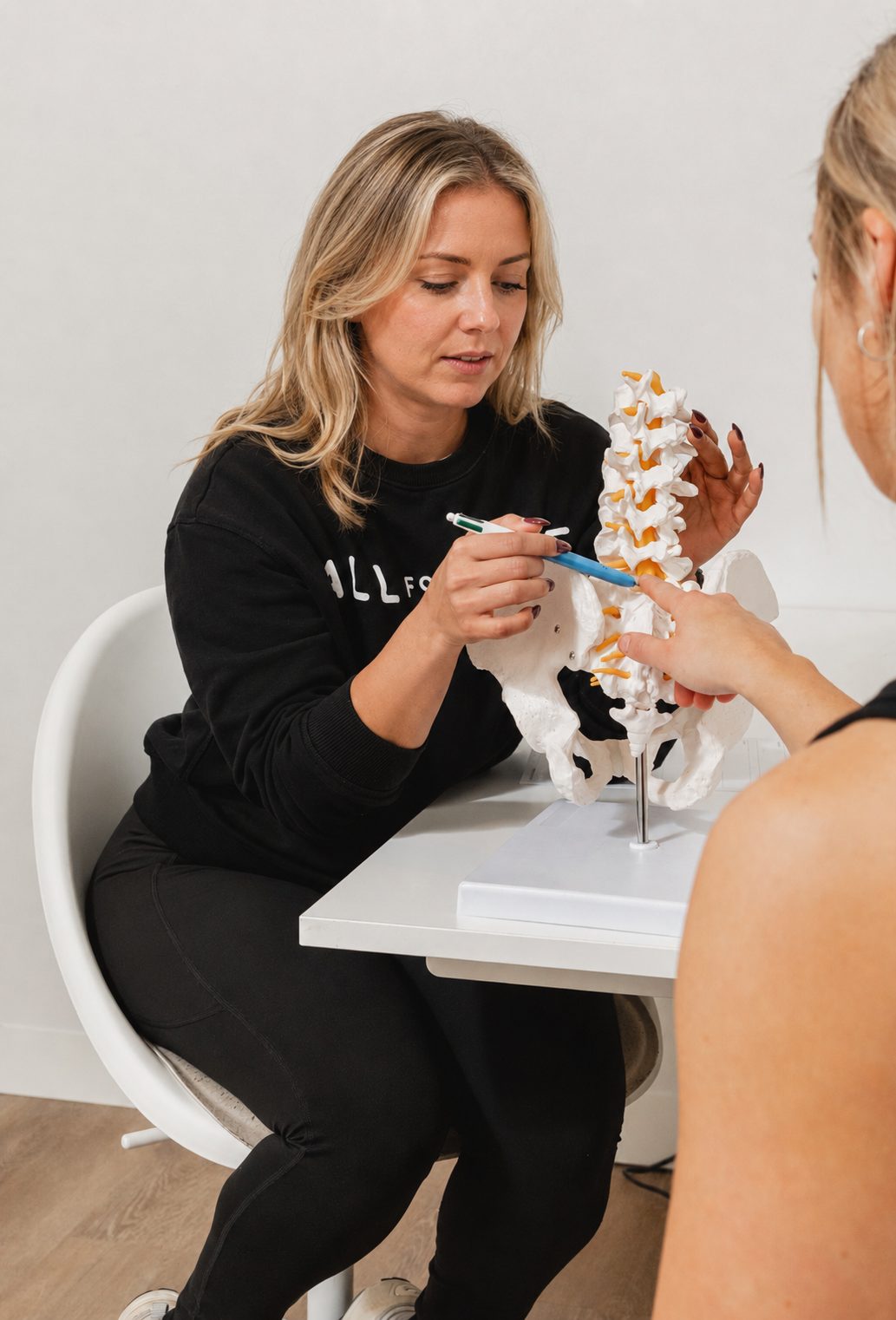
A thorough assessment. Pelvic floor, abdominal separation, scars, strength and whatever else your story points to, at your pace, everything explained as it happens, nothing without your consent.
A written plan. What we found, what we expect to improve, what to strengthen now so this recovery holds for the rest of your life, and your staged path back to the exercise you miss. You’ll leave knowing exactly where your body is up to, most women say for the first time since the birth.
Bring your baby. They’re welcome at every appointment, and nobody here minds a feed or a cry mid-session.

05
This is the difference the building makes. The physio who does your Postnatal Check teaches Mums and Bubs down the hall, so your return to exercise starts with someone who has seen your assessment, in a room of women in exactly the same season, babies included.
From there it’s Clinical Pilates, reformer, strength, whatever you’re rebuilding toward, all under the same roof with one picture of you. And if you’re reading this while still pregnant, start earlier: our pregnancy physiotherapy page is the chapter before this one.
06
“I’ve felt incredibly welcomed, understood and taken care of… Phoebe has provided both physio and pelvic floor help, which was initially nerve wracking, but her expertise, patience and knowledge have made me feel extremely comfortable.”
Charlotte, Google review
The practical bits, sorted before you ask:
You’ll find our Women’s Health Physiotherapists at Yarraville in the inner west, Hampton East in the bayside south east, and Kensington in the inner north west.
Whether it’s been six weeks and you want to set your body up properly for everything ahead, or six years and you’re done putting up with things nobody told you were fixable, the appointment is the same unhurried hour. Book below, or call and tell us as much or as little as you like.
Whether it’s been six weeks and you want to set your body up properly for everything ahead, or six years and you’re done putting up with things nobody told you were fixable, the appointment is the same unhurried hour. Book below, or call us and tell us as much or as little as you like.
Postnatal recovery is not a fixed timeline, and physio after pregnancy is not something you have missed your chance at. The changes of pregnancy and birth respond to the right loading for years afterwards, which is why postpartum rehab works just as well for a woman whose youngest is at school as for one who gave birth last month.
What that looks like in practice: we assess where your pelvic floor and abdominal wall actually are, not where a chart says they should be, then rebuild the strength in stages that fit around a baby. Ab separation gets its own plan, and if you want the detail we have written about diastasis recti and what actually closes it. Runners get a formal readiness test rather than a guess, and there is a full guide to returning to running postnatally if you want to know what that involves before you book.
All three of our Melbourne studios run postnatal and postpartum physiotherapy appointments: Yarraville in the inner west, Hampton East in the bayside south east, and Kensington in the inner north west.
Most women who give birth vaginally have some degree of perineal tear or an episiotomy, and almost nobody is told what happens once the stitches dissolve.
Tears are graded. A first degree tear involves the skin only. A second degree tear, which is the most common, goes into the perineal muscle and is usually stitched. Third and fourth degree tears extend into the anal sphincter and are grouped together as an obstetric anal sphincter injury, or OASI. The grade matters, because it changes what recovery should look like, and a third or fourth degree tear warrants a proper pelvic floor assessment rather than wait and see.
Stitches usually dissolve within two to four weeks and the early soreness settles over about six. What often does not settle on its own is the scar. A perineal scar that has tethered can stay tender for months, make sitting uncomfortable and make sex painful long after everyone has stopped asking about it. Scar massage once the tissue is fully healed changes that, and so does treating the pelvic floor muscles around it, which frequently grip in response to pain rather than being weak. Both are covered in a 6 week postnatal check.
Get medical advice promptly for pain that is increasing rather than easing, a wound that is opening or has an offensive discharge, a fever, or any loss of control of wind or bowels.
If you leak when you cough, sneeze, laugh, run or lift the pram, that is stress incontinence, and around one in three women has it in the first year after birth. Common is not the same as normal, and it is not something you have to wait out or dress around.
Urgency is a different problem with a different fix: a sudden desperate need to go, sometimes with leaking before you get there. Plenty of women have both. Working out which one you have is most of the job, because the treatment is not the same.
Supervised pelvic floor muscle training is the recommended first line treatment for stress incontinence, ahead of surgery. The word supervised is doing the work in that sentence. A large proportion of women following pelvic floor exercises from an app are not contracting the right muscles, and some are squeezing a pelvic floor that is already overactive, which makes the leaking worse rather than better. We have written in more detail about telling a tight pelvic floor from a weak one and about why bladder leakage after kids is common but not normal.
The assessment takes an hour, it is done by a women’s health physiotherapist, and it is the same starting point whether your youngest is six weeks or sixteen.
A full-hour assessment with a women’s health physiotherapist covering your pelvic floor, abdominal separation, caesarean or perineal scars, strength, and a staged plan back to exercise. It goes deeper than the six-week GP check, which focuses on your medical recovery.
Any time from around six weeks after birth, once your GP check is done. But there’s no expiry: the assessment is just as valuable months or years later, and many of ours happen well after the first birthday.
No. Pelvic floor symptoms, abdominal separation and pain respond to the right treatment at every stage. If something has never felt right since a birth, however long ago, it’s worth assessing.
Yes. Pregnancy loads the pelvic floor regardless of birth type, and caesarean recovery adds scar care and deep-core rehabilitation that deserve proper attention.
Most guidelines suggest not before 12 weeks, but the honest answer is individual: running loads the pelvic floor with every stride, and starting too early can cause problems that take far longer to fix. Our Return to Running program formally assesses your strength, pelvic floor and impact readiness, then builds you back through a staged, physio-guided progression.
Yes, always. Feeds, naps and crying mid-appointment are all completely normal here, and our Mums and Bubs classes welcome babies too.
No referral needed. Private health extras rebates are claimed on the spot with HICAPS, and Medicare Care Plans are welcome.
All for One’s women’s health physiotherapists run Postnatal Checks at Yarraville in the inner west, Hampton East in the bayside south east, and Kensington in the inner north west. Book online or call your nearest studio.
The stitches usually dissolve within two to four weeks and the worst of the soreness settles over about six. The scar itself keeps changing for months. If sitting is still uncomfortable, or sex is painful, at three months or beyond, that is the scar and the pelvic floor muscles around it rather than a wound that has failed to heal, and both respond well to treatment.
It is common. Around one in three women leaks in the first year after birth. That is not the same as normal, and it is not something you have to accept. Leaking when you cough, sneeze, laugh or run is stress incontinence, and supervised pelvic floor muscle training is the recommended first line treatment. It is worth assessing whether your pelvic floor is weak or overactive first, because the exercises differ.
Experts in their field, specialists in holistic health
Prefer to talk? Yarraville (03) 8319 9945 · Hampton East (03) 9086 3740 · Kensington (03) 8319 9946
Please don’t include medical or health information in this form. For clinical questions or appointments, call your studio or book online. Your message goes straight to the studio you choose.
This site is protected by reCAPTCHA and the Google Privacy Policy and Terms of Service apply.

Specialist care from physios who truly understand women’s bodies.

Senior Women’s Health Physiotherapist
Emily has a deep passion for empowering women to take control of their pelvic health. She creates a warm, judgement-free space where you can talk openly about what’s really going on.
With advanced training in pelvic floor rehabilitation, Emily treats a wide range of conditions including incontinence, prolapse, pelvic pain, and pregnancy-related concerns. She takes the time to really listen, explain what’s happening in your body, and build a treatment plan that fits your life. Whether you’re preparing for birth, recovering postpartum, or navigating menopause — Emily is here to help you feel strong and confident again.

Women’s Health Physiotherapist
Tori is passionate about helping women feel heard and supported through every stage of life. She combines clinical expertise with genuine empathy to deliver care that makes a real difference.
Tori brings a holistic, evidence-based approach to treating pelvic floor dysfunction, pregnancy-related pain, and postnatal recovery. She has a special interest in helping women return to exercise safely after having a baby and supporting those with persistent pelvic pain. Tori believes every woman deserves to understand her body and feel empowered in her recovery — no topic is too awkward, and no concern is too small.