Myotherapy vs Remedial Massage: Which One Do You Actually Need?
They overlap, but they are not the same. Here is how to tell which one you need.

They overlap, but they are not the same treatment. The difference between myotherapy and remedial massage is scope, not pressure.
You are sore, tight, or living with pain that will not shift, and you know you need hands-on treatment. Then you hit two names that sound alike. Most people book whichever appointment is free first. That works some of the time, but if you have been going back and forth without lasting change, the difference between the two may be the missing piece.
We offer remedial massage at Yarraville, Hampton East and Kensington, and myotherapy at Yarraville. Explaining which one fits is one of the most common conversations our therapists have, so here it is in plain terms.
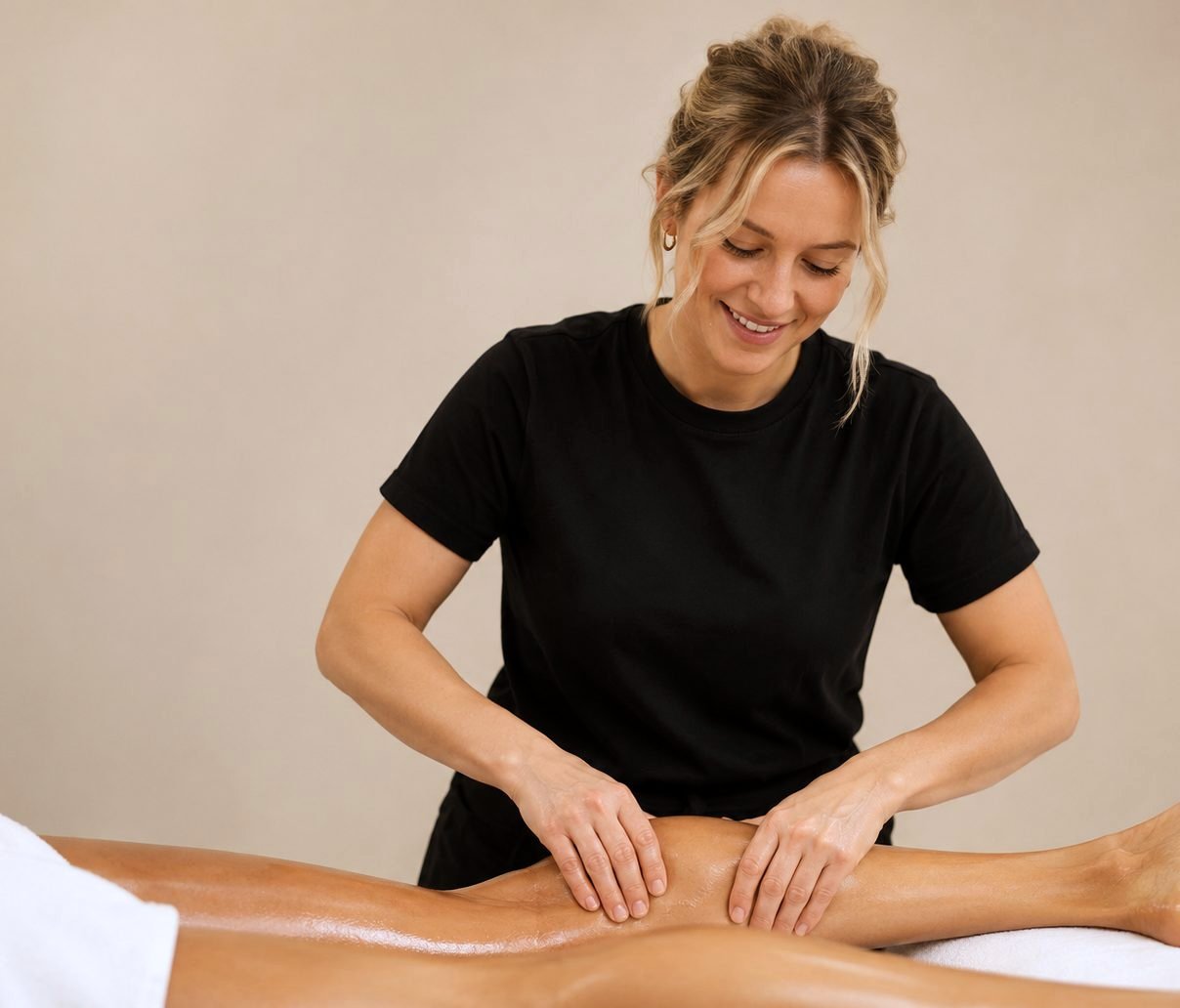
Targeted hands-on treatment for muscle tension, tightness, restricted movement and the pain that comes with them. Your therapist assesses the area and works on it with deep tissue work, trigger point work and stretching. Best for straightforward muscle problems. Therapists hold at least a Diploma of Remedial Massage.
A clinical treatment for musculoskeletal pain that looks for why it hurts as well as where. A longer assessment, including orthopaedic testing, and a wider set of tools: dry needling, cupping, joint mobilisation, nerve-focused techniques and home exercises. Best for pain that is chronic, keeps coming back, or does not match where you feel it.
No. Remedial massage is aimed at a specific problem. Your therapist asks about your pain, looks at your posture and how the area moves, then works directly on the muscles involved, using deep tissue work, trigger point therapy and stretching. The aim is less tension, more movement and less pain in that area.
People whose problem sits in the muscles: a tight lower back, a stiff neck from desk work, a shoulder that has been grumbling, tension headaches, tightness from training, or recovery from a minor strain. For many people that is the right level of treatment, and it is the one most often claimed on health fund extras.
This is the most common misunderstanding. A myotherapist is trained in remedial massage plus further clinical study, and the extra is in the assessment rather than the pressure. Your pain might sit in your hip while the driver is your lower back, your pelvis, or the way you move. A myotherapist tests for that, so treatment goes to the cause as well as the sore spot.
As well as hands-on massage, myotherapists use dry needling, dynamic cupping, joint mobilisation, neurodynamic techniques and corrective exercise. That wider toolkit lets them come at a problem from several angles in one appointment, and build a plan that covers today’s pain and the mechanics behind it.
People whose pain is chronic, recurring or complicated. If remedial massage helps for a few days and then the same problem returns, that pattern often points to a cause that has not been treated yet. Myotherapy also suits referred pain, where you feel it somewhere other than its source, and problems that involve several areas at once.
Still not sure? Book either one and tell us what is going on. Reception can point you to the right appointment, and if you land in the wrong one your therapist will say so, and neither needs a referral.
A Cochrane review of massage for low back pain found that massage improved pain and function in the short term compared with no treatment or inactive treatments. The authors rated the evidence low quality and found little support for long-term benefit, which is why we treat massage as one part of a plan rather than the whole plan (Furlan et al., 2015).
Trigger point massage is used in both remedial massage and myotherapy. A small early study found fewer tension headaches during a course of trigger point massage (Quinn et al., 2002). Larger trials since then have been more mixed, so it is worth trying rather than a sure thing.
Dry needling is one of the techniques that sets myotherapy apart. A 2017 systematic review and meta-analysis found low to moderate quality evidence that dry needling reduced musculoskeletal pain more than no treatment or sham needling in the short term, with less certainty about longer-term function (Gattie et al., 2017). It works best inside a broader treatment plan.
The common thread: targeted hands-on treatment does better than doing nothing, and the reasoning behind the treatment matters as much as the technique.
Myotherapy at Yarraville. Edoardo Ghezzi, a clinical myotherapist, and Kiyomi Sato, a myotherapist and remedial massage therapist, see myotherapy clients at our Yarraville studio. You can meet them and book on our page for massage and myotherapy in Yarraville.
Remedial massage at all three studios. Book remedial massage at Yarraville, Hampton East or Kensington. In the inner north west, see massage in Kensington for therapists and prices there.
Physios in the same team. If you are seeing a physiotherapist for an injury, they can suggest remedial massage or myotherapy alongside it. If your therapist finds something that needs a physio, such as a joint problem, a post-surgical question or a rehab program, the referral stays inside the same team.
One plan, not three. A sore lower back might need physio for rehab and loading, myotherapy for stubborn muscle guarding, and remedial massage for maintenance once it settles. With all three in the same team, your plan is joined up rather than split across three clinics.

Remedial massage and myotherapy help with a wide range of muscle and joint problems, but they are not the starting point for everything. See a physiotherapist or your GP first if you have:
Your therapist will tell you if something sits outside their scope and needs another practitioner to look at it.
Remedial massage treats soft tissue tension, tightness and restricted movement with hands-on techniques, focused on the area that hurts. Myotherapy includes that, plus a broader clinical assessment such as orthopaedic testing, and extra techniques like dry needling, cupping, joint mobilisation and corrective exercise. The key difference is scope: myotherapy looks harder for the cause.
Neither is better. They suit different situations. Remedial massage works well for straightforward muscular problems like tension, tightness and minor strains. Myotherapy suits chronic, complex or recurring pain where the underlying cause needs finding. The right choice depends on what is going on in your body.
No. The difference is not pressure. Myotherapy involves a fuller clinical assessment and a wider range of techniques, including dry needling, cupping and joint mobilisation, with the aim of finding and treating the cause of the pain rather than only the sore spot.
No. You can book either directly, without a GP referral. If your treatment is part of a WorkSafe or TAC claim, tell us before you book, because funding rules for massage and myotherapy are different from physiotherapy.
Remedial massage is claimable on extras with most private health funds, and many funds also cover myotherapy, though cover for myotherapy varies more from fund to fund. We claim through HICAPS on the spot, so you pay only the gap. Check your own policy for rebate amounts and annual limits.
It can help, especially where muscle tension is part of the picture, and the research supports short-term relief for problems like low back pain. If your chronic pain is complex, keeps returning or seems to travel, myotherapy may suit you better because of its broader assessment, often alongside physiotherapy.
Remedial massage therapists hold at least a Diploma of Remedial Massage (HLT52021). Myotherapists complete a Bachelor of Health Science (Clinical Myotherapy) or the older Advanced Diploma of Myotherapy, which build on remedial massage training. Neither profession is registered with AHPRA. Practitioners belong to professional associations such as Massage and Myotherapy Australia, which require insurance and ongoing training.
All for One offers remedial massage at Yarraville, Hampton East and Kensington, and myotherapy at Yarraville. No referral is needed, and you can book online.
Myotherapy is at Yarraville. Remedial massage runs at Yarraville, Hampton East and Kensington. Claim on your health fund before you leave, and no referral needed.
Myotherapy - 25/10/2026
Prefer to talk? Yarraville (03) 8319 9945 · Hampton East (03) 9086 3740 · Kensington (03) 8319 9946
Please don’t include medical or health information in this form. For clinical questions or appointments, call your studio or book online. Your message goes straight to the studio you choose.
This site is protected by reCAPTCHA and the Google Privacy Policy and Terms of Service apply.

Care from physios who truly understand women’s bodies.

Senior Women’s Health Physiotherapist
Emily has a deep passion for empowering women to take control of their pelvic health. She creates a warm, judgement-free space where you can talk openly about what’s really going on.
With advanced training in pelvic floor rehabilitation, Emily treats a wide range of conditions including incontinence, prolapse, pelvic pain, and pregnancy-related concerns. She takes the time to really listen, explain what’s happening in your body, and build a treatment plan that fits your life. Whether you’re preparing for birth, recovering postpartum, or navigating menopause — Emily is here to help you feel strong and confident again.

Women’s Health Physiotherapist
Tori is passionate about helping women feel heard and supported through every stage of life. She combines clinical expertise with genuine empathy to deliver care that makes a real difference.
Tori brings a holistic, evidence-based approach to treating pelvic floor dysfunction, pregnancy-related pain, and postnatal recovery. She has a special interest in helping women return to exercise safely after having a baby and supporting those with persistent pelvic pain. Tori believes every woman deserves to understand her body and feel empowered in her recovery — no topic is too awkward, and no concern is too small.