Physiotherapy - 15/08/2026

The part of your body nobody explained, finally explained.
You know more about your knees than your pelvic floor, and it’s not your fault: nobody teaches this. So when something changes, a leak at the trampoline, a heaviness by evening, pain that arrives with your period or with intimacy, most women are left guessing whether it’s normal, serious, or fixable. This page is the explanation you should have been given years ago, and the appointment behind it is where things start getting better.
Your pelvic floor is a group of muscles slung like a hammock from your pubic bone to your tailbone. It holds your bladder, bowel and uterus where they belong, keeps you dry when you cough and laugh, and works in your core with every lift and step. Like any muscle group, it can be weakened, overworked, too tight, or injured, by pregnancy and birth, by surgery, by years of heavy lifting or straining, by hormonal change through menopause, and sometimes by nothing you can point to at all.
Here’s the fact that changes everything once you know it: because these are muscles, they respond to treatment. Assessed properly and trained the right way, pelvic floors improve at every age. That’s what a pelvic health physiotherapist does, and it’s why the symptoms below are on this page: not because they’re rare, but because they’re treatable.
Leaking with coughs, sneezes, laughs or exercise usually means the pelvic floor can’t quite match the pressure from above; sudden, hard-to-defer urges are usually a bladder-and-muscle habit that’s trainable. Both are among the most successfully treated things we see, and neither is something you simply live with now.
That dragging or bulging feeling, often worse by evening or after a big day, happens when the pelvic organs sit lower than they should. It’s common after births and around menopause, it’s understandably frightening, and it responds well to pelvic floor training and practical symptom management: how you lift, how you manage pressure through the day, and how you build strength back safely. Being told what’s actually happening is usually the moment the fear halves.
Pain with intimacy, tampon use or examinations often involves pelvic floor muscles that have learned to guard and can’t fully let go, and period-related or endometriosis-related pain can wind the whole system up further. Treatment is gradual, consent-led and genuinely effective, and you will never be asked to push through anything.
Preparing the pelvic floor for birth, and rebuilding it afterwards: recovery assessments, prolapse and leaking after births recent or long past, and caesarean and perineal scar care. If your baby has just arrived, start with our 6 week postnatal check.
Falling oestrogen changes the tissue the pelvic floor is made of, which is why bladder habits, comfort and confidence can shift in this season. The right training, and strength work for the rest of you, makes a measurable difference. Pregnancy massage and our broader women’s health physiotherapy sit alongside all of this when you need them.
Because these are muscles, they respond to treatment.
If it’s on your mind, yes. Nobody here will think it’s too small, and the earlier a pelvic floor issue is assessed, the simpler it usually is to treat. “I’m not sure if this is normal” is a complete and sufficient reason for an appointment.
Only if you choose it. An internal assessment is often the most informative option, which is why it’s offered, but it never happens without your explicit consent and it is never a requirement. Real-time ultrasound lets your physio assess your pelvic floor on a screen instead, and plenty of first appointments are simply a conversation. Every step is explained before it happens, and you can change your mind at any point, including mid-appointment.
Say it however it comes out. Our physios have heard every version, hundreds of times, and there is no phrasing that will be awkward on our side of the room. Many women tell us the appointment was the first time they’d said it out loud, and that the saying was half the relief.
It begins with your story: symptoms, history, births, surgeries, and what you want back. Then whatever assessment you’re comfortable with, explained before it happens. Then the part most women say nobody has ever done for them: your body explained properly, in plain English, with the why behind every symptom.
You’ll leave with a written plan, what we found, what we expect to improve, and the steps we’ll take together, and rebates are claimed on the spot with HICAPS.
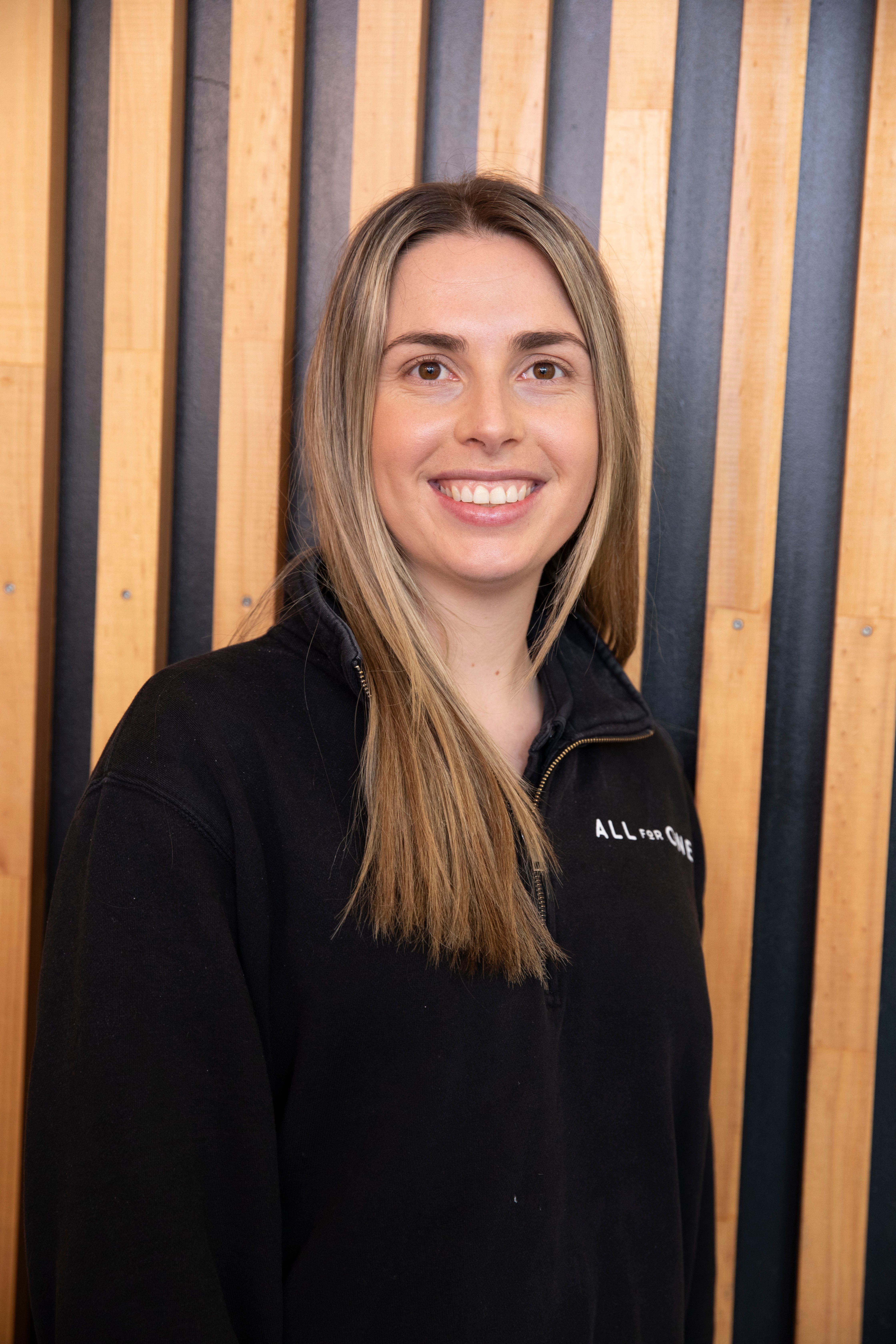
Senior Women’s Health Physiotherapist
Postgraduate-trained in pelvic floor rehabilitation: incontinence, prolapse, pelvic pain, birth preparation and postnatal recovery.

Musculoskeletal & Women’s Health Physiotherapist
Over ten years of experience, with a special interest in persistent pelvic pain, safe return to exercise after birth, and pelvic health through perimenopause and menopause.
My appointment was with Emily, and she was incredibly knowledgeable, supportive and warm throughout the whole consultation… made me feel super comfortable to chat through all concerns and questions of pre and post-pregnancy. Highly recommend the Hampton East teamL.H., Google review
The practical bits, sorted before you ask: appointments run a full hour, no GP referral needed, HICAPS on the spot for private health extras, Medicare Care Plans welcome, babies welcome at appointments, parking on site off the Nepean Hwy, and times Monday to Saturday including mornings and evenings.
Our Hampton East studio is a short drive from Hampton with parking on site. If the inner west or inner north suits your week better, our Yarraville and Kensington studios have pelvic health physiotherapists too.
Whatever brought you to this page has probably been on your mind longer than it needed to be. Book a time below, or call and say as much or as little as you like; the front desk will quietly take it from there.
Physiotherapy focused on the pelvic floor muscles and the conditions they’re involved in: incontinence, prolapse, pelvic pain, pregnancy and postnatal recovery, and menopause-related changes. Because the pelvic floor is muscle, it responds to assessment and training at every age.
All for One’s pelvic health physiotherapists are minutes from Hampton at our Hampton East studio on the Nepean Hwy, with parking on site. Book online or call 03 9086 3740.
Only with your explicit consent, never as a requirement. Internal assessment is offered because it’s informative, and real-time ultrasound provides a comfortable alternative. Many first appointments are simply a conversation.
Yes. The pelvic floor responds to the right treatment at every age and stage. Earlier is easier, but later is never too late, and nobody will ask why you waited.
Often, yes. Pelvic floor training and symptom management help many women manage prolapse symptoms well, and most notice a real difference in how the end of the day feels. If your situation needs more than physiotherapy, you’ll hear that honestly, with the right referral.
It’s common, and it’s treatable, and those are different things. Leaking with running, jumping or lifting is a sign your pelvic floor needs assessment and training, not a reason to give up the exercise you love.
No referral needed. Private health extras rebates are claimed on the spot with HICAPS, and Medicare Care Plans are welcome.
Physiotherapy - 15/08/2026
Prefer to talk? Yarraville (03) 8319 9945 · Hampton East (03) 9086 3740 · Kensington (03) 8319 9946
Please don’t include medical or health information in this form. For clinical questions or appointments, call your studio or book online. Your message goes straight to the studio you choose.
This site is protected by reCAPTCHA and the Google Privacy Policy and Terms of Service apply.

Specialist care from physios who truly understand women’s bodies.

Senior Women’s Health Physiotherapist
Emily has a deep passion for empowering women to take control of their pelvic health. She creates a warm, judgement-free space where you can talk openly about what’s really going on.
With advanced training in pelvic floor rehabilitation, Emily treats a wide range of conditions including incontinence, prolapse, pelvic pain, and pregnancy-related concerns. She takes the time to really listen, explain what’s happening in your body, and build a treatment plan that fits your life. Whether you’re preparing for birth, recovering postpartum, or navigating menopause — Emily is here to help you feel strong and confident again.

Women’s Health Physiotherapist
Tori is passionate about helping women feel heard and supported through every stage of life. She combines clinical expertise with genuine empathy to deliver care that makes a real difference.
Tori brings a holistic, evidence-based approach to treating pelvic floor dysfunction, pregnancy-related pain, and postnatal recovery. She has a special interest in helping women return to exercise safely after having a baby and supporting those with persistent pelvic pain. Tori believes every woman deserves to understand her body and feel empowered in her recovery — no topic is too awkward, and no concern is too small.