All in - 04/11/2026

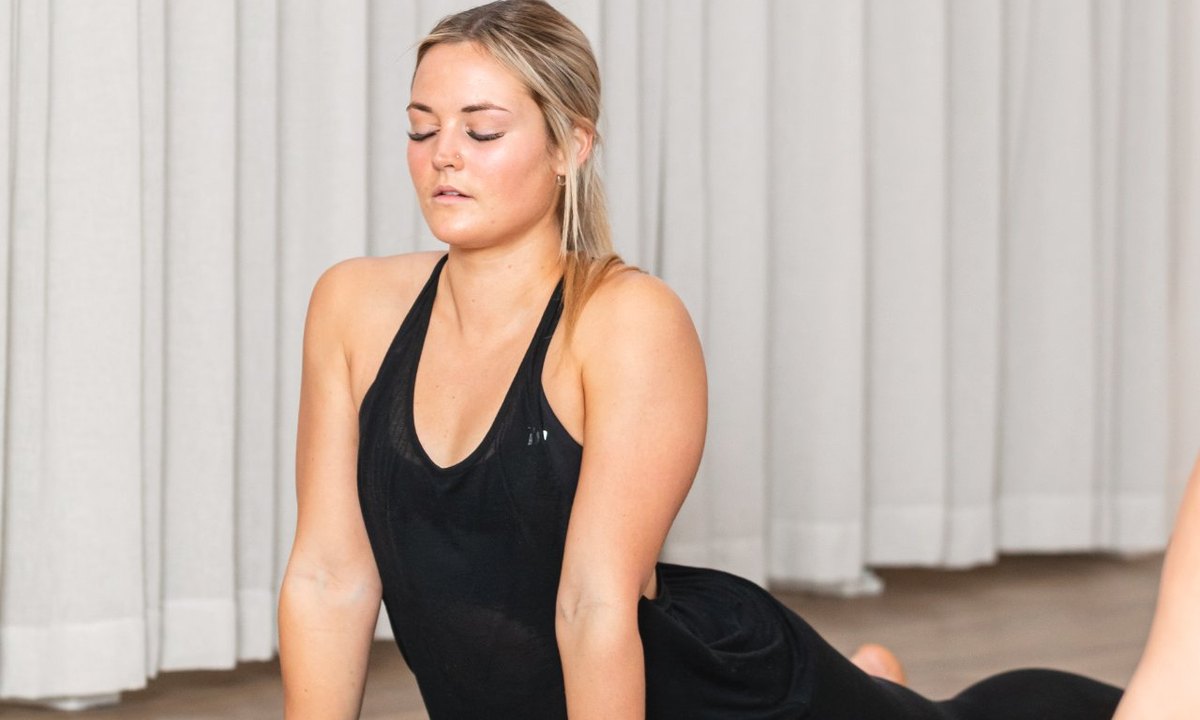
Stretching tends to sit at the bottom of the list, somewhere under sorting the Tupperware drawer. Ten minutes a week for each stiff muscle is about all it takes, and what it does reaches well past your hamstrings.
Crouch for the roasting tray in the bottom cupboard and you’ll find out where your mobility is at. If a hip complains on the way down and you come back up with a hand on the bench, that’s what we mean, and it has nothing to do with being bendy. Mobility work closes the gap between the range you have and the range you use, and it helps your circulation, your balance and how much things hurt.
Flexibility is how far a joint goes when something else does the moving. Mobility is how far you can take it yourself, with control, toddler on hip included. Regular stretching does loosen you up, women more than men, and the stiffest people gain the most. Early on the change is mostly your nervous system learning to tolerate a longer position, and about ten minutes a week for each muscle you stretch was as much as anyone needed in the biggest review so far, mostly of younger adults.
Your calf muscles are a second pump. Every time one tightens it squeezes blood and lymph back up towards your heart, which is why your ankles puff after a day in a chair and a walk sorts them out. Swelling in one leg only, swelling that comes on suddenly, or ankles still puffy in the morning is one for your GP.
A bout of exercise turns your pain dial down for a while afterwards, and the effect is a little bigger in women and after moderate strength work. If pain has been hanging around for months it’s less predictable, and the same class can leave one person better and another more sore, which is why our physios start you on what you can handle.
Mobility also keeps you upright on a wet footpath. In older adults living at home, exercise cut falls by 23% in the biggest review there is, mostly of women, and the programs that worked best were built on balance, the kind of thing you can do while the kettle boils, like standing on one foot.
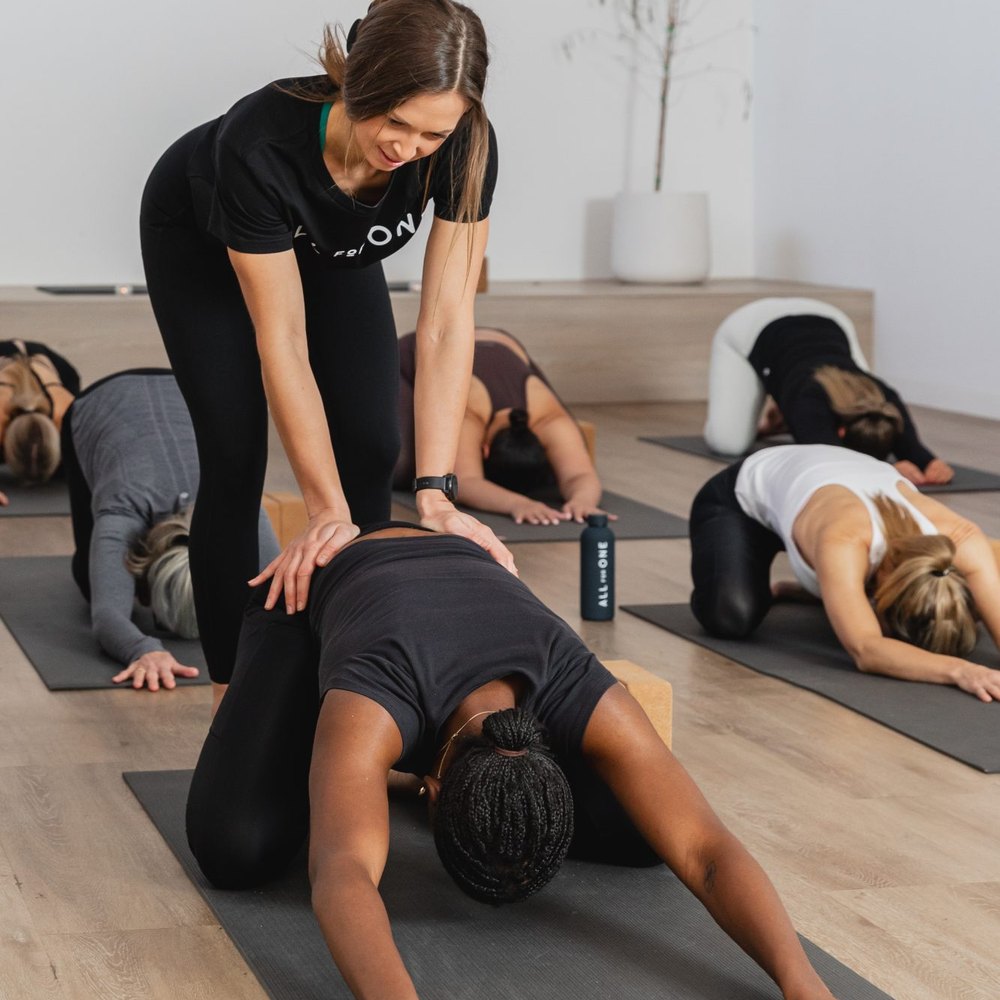
Yoga is mobility work with the breathing built in, and beginners are welcome in our yoga classes. For a back that’s been sore for months, yoga helps a little over doing nothing, too little for the reviewers to call it important on its own, with a few more sore backs than no exercise, and it did about as well as any other back exercise. Where it earns extra credit is stress: people who do it have lower stress hormones, a slower resting heart rate and lower blood pressure than people put on other activities for comparison.
Our classes run at Yarraville and Hampton East. Yoga Flow is the moving one, poses linked by your breath. Yin is the still one, on the floor with bolsters and blocks holding you in long stretches. Classes are capped at 15, mats and props are provided, and you don’t need to be flexible.
On most days you want 30 minutes or more of moderate activity, plus muscle-strengthening on 2 or more days a week and mobility, balance and coordination work on 3 or more days. That’s the Australian guideline. Stretching alone won’t get you there, so pair the five moves below, two minutes each, with a strength class, or Clinical Pilates if you’d rather a physio designed the program. Lifting weights through a full range loosens you up about as much as stretching does, so the strength room counts too.
If you have low bone density, keep the cat and cow and the open book small and slow. A sore knee wants a towel under it in the lunge and a shallower squat. If you’re pregnant and your pelvis is sore, keep the squat shallow or skip it. Unsure, ask one of our physios.
Mobility is range you can use, and a few minutes most days is all it asks. Do the five moves, lift on two days, stand on one foot while the kettle boils, and bring a sore joint to our physios.
Start with a yoga class
Yoga Flow and Yin run at Yarraville and Hampton East. If a joint is sore as well as stiff, see one of our physios first and we’ll work out what’s going on.
Flexibility is how far a joint goes when something else moves it. Mobility is how far you can take it yourself, with control, and lifting helps too.
A few minutes most days. About ten minutes a week for each muscle was as much as anyone needed to get looser, and the Australian guidelines ask for mobility and balance work on 3 or more days.
About as well as other exercise, and only a little better than nothing, with a few more sore backs than no exercise, the same rate as other exercise. If the pain is new or comes with numbness, see a physio first.
In healthy adults a session of exercise lowers pain sensitivity for a while, and in persistent pain it can go either way, so our physios set the type and dose with you.
No. Beginners are welcome in our classes, and our teachers work alongside our physios to design them. Yin, the still one, is where to start if you’d rather go slow.
General information only. This article is general information, not advice for your situation. Everyone’s body is different, so talk to your physio, GP or another health professional about your own joints before you start or change an exercise program, especially if you have an injury, a joint condition, low bone density or persistent pain, or you’re pregnant.
All in - 04/11/2026

Prefer to talk? Yarraville (03) 8319 9945 · Hampton East (03) 9086 3740 · Kensington (03) 8319 9946
Please don’t include medical or health information in this form. For clinical questions or appointments, call your studio or book online. Your message goes straight to the studio you choose.
This site is protected by reCAPTCHA and the Google Privacy Policy and Terms of Service apply.

Care from physios who truly understand women’s bodies.
Senior Women’s Health Physiotherapist
Emily has a deep passion for empowering women to take control of their pelvic health. She creates a warm, judgement-free space where you can talk openly about what’s really going on.
With advanced training in pelvic floor rehabilitation, Emily treats a wide range of conditions including incontinence, prolapse, pelvic pain, and pregnancy-related concerns. She takes the time to really listen, explain what’s happening in your body, and build a treatment plan that fits your life. Whether you’re preparing for birth, recovering postpartum, or navigating menopause — Emily is here to help you feel strong and confident again.

Women’s Health Physiotherapist
Tori is passionate about helping women feel heard and supported through every stage of life. She combines clinical expertise with genuine empathy to deliver care that makes a real difference.
Tori brings a holistic, evidence-based approach to treating pelvic floor dysfunction, pregnancy-related pain, and postnatal recovery. She has a special interest in helping women return to exercise safely after having a baby and supporting those with persistent pelvic pain. Tori believes every woman deserves to understand her body and feel empowered in her recovery — no topic is too awkward, and no concern is too small.