Why Does My Back Hurt When I Sit? Causes, Solutions & Expert Tips
Desk job leaving your back sore? Our physios explain why it happens and what actually helps long-term.

Understanding desk-related back pain — and what actually helps
If you’ve ever stood up from your desk and felt stiff, tight, or sore in your lower back, you’re not alone. “Why does my back hurt when I sit?” is one of the most common things we hear from clients at our Hampton East, Yarraville, and Kensington studios — especially from people who spend long hours at a computer.
The good news? Sitting itself isn’t the enemy. The real issue is how long you sit, how often you move, and how prepared your body is to tolerate that load. And that’s something we can absolutely work with.
Not exactly. Your spine is designed to move — flex, extend, rotate. The problem isn’t sitting. It’s staying in one position for too long without giving your body the variation it craves.
When you sit for extended periods:
Over time, this can lead to stiffness, discomfort, and persistent lower back pain from sitting — something our physio and clinical Pilates team works with every day.
This is one of the most telling patterns we see. People describe their back pain as manageable in the morning, but by mid-afternoon they’re shifting in their seat, and by the time they stand up to leave, they feel stiff and tight.
This pattern almost always points to postural fatigue, not structural damage. Your body simply loses its ability to tolerate the same position over hours without movement. Think of it like holding a light weight for six hours — eventually, even something small becomes uncomfortable.
That’s reassuring to know. It means the problem isn’t that something is broken — it means your body needs more capacity and variety.
Your spine loves variation. When it stays in the same posture for hours on end, the surrounding tissues become load-sensitive and reactive. It doesn’t take a dramatic injury — just the slow accumulation of the same position, day after day.
If your core, glutes, and back muscles aren’t conditioned to support prolonged sitting, they fatigue faster — and your spine picks up the slack. Building strength in these areas is one of the most reliable long-term strategies for desk-related back pain, and it’s exactly what our clinical Pilates and physiotherapy programs are designed to do.
Stress often shows up in the body before we notice it mentally. Increased muscular tension around the lower back, shoulders, and neck is a very common contributor to desk-related pain — and one that’s frequently overlooked. Remedial massage and myotherapy can be genuinely helpful here.
Whether it’s after annual leave, parental leave, or a period of working from home with more movement, returning to full-time desk work can be a real adjustment. Your body may simply be readapting to a sitting load it hasn’t had for a while. Gradual reloading and some targeted support can make all the difference.
You don’t need a 20-minute stretch routine in the middle of your workday. Standing up every 30–60 minutes for just one to two minutes can significantly reduce stiffness and reset your body’s tolerance. Set a phone alarm if you need the reminder — it really does help.
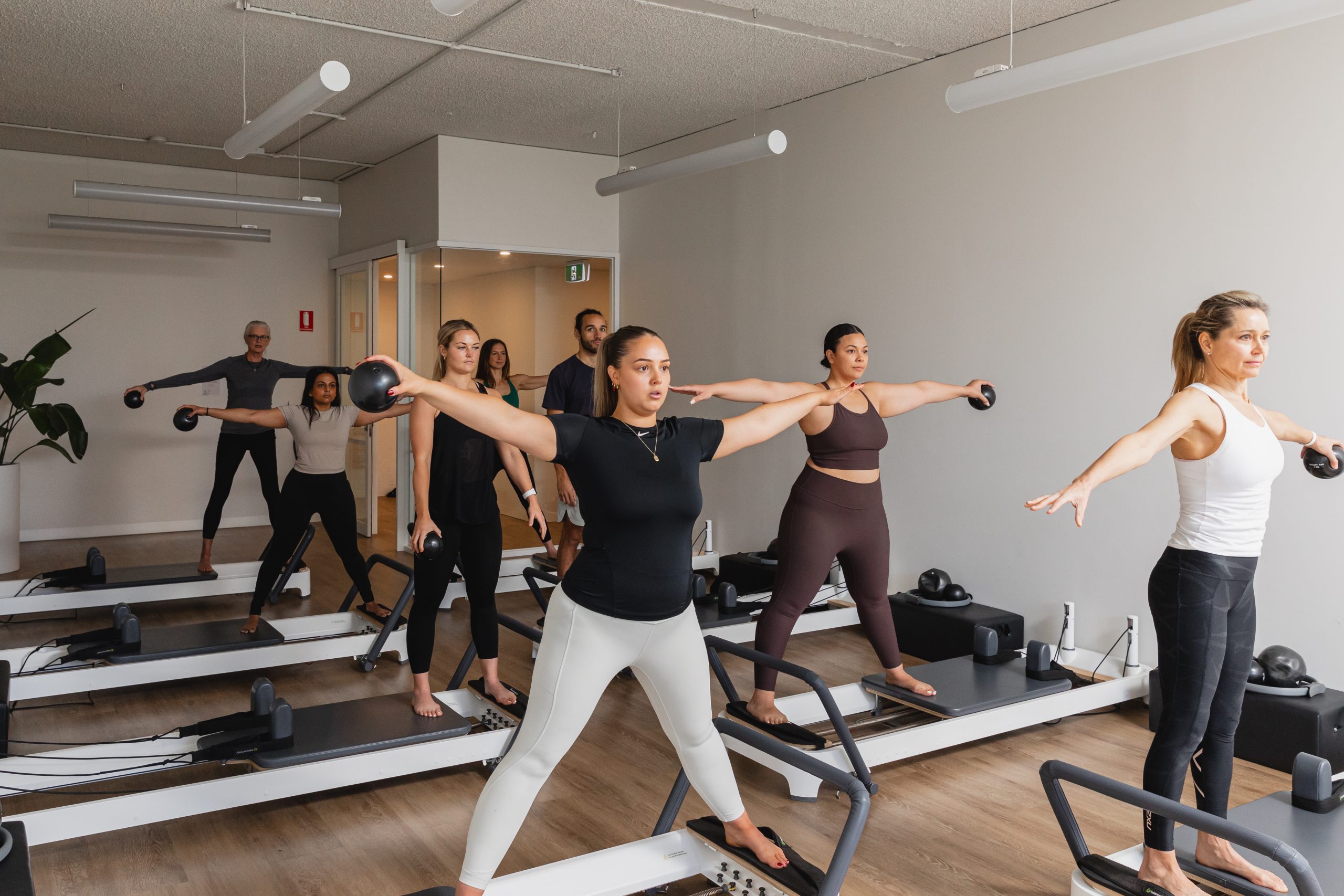
Stretching can feel great in the moment, but it rarely solves the underlying problem on its own. Long-term relief from lower back pain from sitting comes from building the strength and endurance your spine needs to cope with daily load. Our Clinical Pilates sessions and Reformer Pilates classes are built around exactly this — gentle, evidence-based movement that progressively builds capacity and confidence.
When stress and prolonged sitting combine, the result is often deep muscular tension that doesn’t budge easily on its own. Our remedial massage and myotherapy team can help release that tension and get you moving more freely — which is a useful complement to any longer-term strengthening plan.
If your back pain has been going on for a few weeks or more, it’s worth getting eyes on it properly. Our physiotherapists will assess what’s actually driving your pain — whether it’s a load issue, a strength deficit, a movement pattern, or something that needs a different approach — and put together a clear, practical plan. No guesswork. No generic exercises from a Google search.
Most desk-related back pain responds really well to the right support. But don’t leave it too long — come in if:
Our team at All for One (Hampton East, Yarraville, and Kensington) is here to help you get clarity and get moving again.
We see a lot of people who have invested in standing desks, ergonomic chairs, lumbar supports, and monitor risers — and are still dealing with lower back pain from sitting. That’s because ergonomics, while genuinely helpful, can only do so much.
A strong, well-conditioned body tolerates sitting far better than a deconditioned one. Even the most perfectly adjusted workstation won’t fix weak glutes, a stiff thoracic spine, or an undertrained core. Ergonomic improvements and physical conditioning work best together — not as substitutes for each other.
The goal isn’t perfect posture. It’s a resilient body.
At All for One, we work with plenty of people who’ve been quietly managing desk-related back pain for years — pushing through, stretching it out, and hoping it’ll eventually go away on its own. It rarely does without the right support.
What we’ve found works is a combination of consistent, guided movement, gradually building strength, avoiding both extremes of total rest and over-doing it, and understanding your own body’s load limits. Whether that looks like Clinical Pilates, physiotherapy, or a mix of treatments, we’ll work with you to find what fits.
Back pain from sitting doesn’t mean your body is broken. It means your body is asking for something — and we’re here to help you figure out what that is.
Ready to do something about it? Book a physiotherapy assessment at our Hampton East, Yarraville, or Kensington studio, or explore our Clinical Pilates and Reformer Pilates classes. We’d love to help.
In most cases, no. Discomfort from prolonged sitting is usually about load and tolerance, not structural damage. That said, if pain has been persisting for a few weeks or more, it’s always worth getting a proper assessment so you know what you’re actually dealing with.
A combination of regular movement breaks (every 30–60 minutes), building core and back strength, and addressing any underlying tension is the most effective approach. A physiotherapy assessment can help you pinpoint exactly where to start.
Honestly? Your next one. There’s no single perfect posture — what matters more is varying your position throughout the day. That said, having your feet flat on the floor, your screen at eye level, and your lower back lightly supported is a solid starting point.
Aim to stand and move for one to two minutes every 30 to 60 minutes. It sounds simple, but for a lot of people it’s genuinely one of the most impactful changes they make.
No — and you don’t need to. The goal isn’t to eliminate sitting, it’s to break it up and build your body’s capacity to handle it well. Avoidance usually makes things worse over time, not better.
Stretching can give you some short-term relief, but it rarely resolves the underlying problem. Building strength and load tolerance is what creates lasting change — which is why we lean heavily on Clinical Pilates and progressive exercise rather than passive stretching alone.
Yes — it’s one of the best tools we have. Clinical Pilates, in particular, is tailored to your body and your specific pain presentation. It builds core strength, improves spinal control, and helps you move with more confidence. Many of our clients notice a real difference within just a few weeks.
All for One has studios in Hampton East, Yarraville, and Kensington, all offering physiotherapy, clinical Pilates, remedial massage, and myotherapy. You can book an appointment online or give us a call — we’re always happy to point you in the right direction.
Physiotherapy - 15/08/2026
Prefer to talk? Yarraville (03) 8319 9945 · Hampton East (03) 9086 3740 · Kensington (03) 8319 9946
Please don’t include medical or health information in this form. For clinical questions or appointments, call your studio or book online. Your message goes straight to the studio you choose.
This site is protected by reCAPTCHA and the Google Privacy Policy and Terms of Service apply.

Specialist care from physios who truly understand women’s bodies.

Senior Women’s Health Physiotherapist
Emily has a deep passion for empowering women to take control of their pelvic health. She creates a warm, judgement-free space where you can talk openly about what’s really going on.
With advanced training in pelvic floor rehabilitation, Emily treats a wide range of conditions including incontinence, prolapse, pelvic pain, and pregnancy-related concerns. She takes the time to really listen, explain what’s happening in your body, and build a treatment plan that fits your life. Whether you’re preparing for birth, recovering postpartum, or navigating menopause — Emily is here to help you feel strong and confident again.

Women’s Health Physiotherapist
Tori is passionate about helping women feel heard and supported through every stage of life. She combines clinical expertise with genuine empathy to deliver care that makes a real difference.
Tori brings a holistic, evidence-based approach to treating pelvic floor dysfunction, pregnancy-related pain, and postnatal recovery. She has a special interest in helping women return to exercise safely after having a baby and supporting those with persistent pelvic pain. Tori believes every woman deserves to understand her body and feel empowered in her recovery — no topic is too awkward, and no concern is too small.