

Physiotherapy - 15/08/2026

Leaking after prostate surgery. Getting up three times a night. A deep ache in the perineum that no scan has explained. Pain that arrives when you sit down and stays there. Most men put up with this for years before they say it to anyone, usually because nobody told them there was a physiotherapist who works on exactly this. There is, and nothing you describe will be new to the physiotherapist you see.
Here is the sentence that keeps men out of the room: “it’s just what happens after fifty.” Just the prostate. Just getting older. Just something you deal with. So you adjust. You know where every toilet on the drive is. You stop the second coffee. You carry a spare pad in the glovebox and tell nobody, including your wife, including your GP.
Men’s pelvic health has had decades less public conversation than women’s, which is why so few men know the option exists at all. The pelvic floor is a sling of muscle that runs from the pubic bone to the tailbone in men exactly as it does in women. It closes the bladder and the bowel, it supports what sits above it, and it plays a part in erectile function. Like any other muscle group it can be weak, it can be overactive, it can be poorly coordinated, and all three respond to assessment and training.
Leakage, urgency, pelvic pain and bowel trouble are common. Common was never the same as normal, and it was never something you had to quietly manage on your own.
You will not be the first man to sit down and say it.
If it has changed how you live, even slightly, it is. Planning your day around toilets counts. One pad a day counts. You don’t need to be at the worst version of it to deserve an appointment, and you don’t need the right words for it either. “Something isn’t right down there” is a perfectly good place to start.
Only as much as you want to, and to exactly one person, behind a closed door. Leakage, pain with sitting, bowel accidents, erections: these are the ordinary contents of the working day here. There is no way to phrase it that will be awkward on our side of the room, and there is no reaction waiting for you. A lot of men tell us the appointment was the first time they had ever said it to anyone.
Not unless you agree to one. An internal (rectal) assessment is the most direct way to feel how the pelvic floor is contracting and releasing, which is why it is offered, but it is never compulsory, it never happens without your explicit consent, and we can work without it. Real-time ultrasound on your lower abdomen shows the same contraction on a screen with nothing internal involved. Plenty of first appointments are a conversation and an external assessment, and that is a complete appointment, not a lesser one.
Some men would rather, and that is a fair thing to want. What matters clinically is postgraduate pelvic floor training and how many men the physiotherapist has actually assessed. If the gender of the person in the room is what stands between you and booking, say so when you call and we will be straight with you about who is available.
No. Whether the surgery was six weeks ago or six years ago, muscle responds to training at every age. Earlier is easier, particularly after prostate surgery, but later is not too late and nobody here will ask why you waited.
Yes, and this is the part most men never get told. Pelvic floor muscle training is recommended in Australian and international guidelines for urinary incontinence after prostate surgery, and physiotherapy is part of standard care for chronic pelvic pain in men. Nobody can promise you a particular result. What we can do is assess properly, treat what we find, and tell you honestly what we expect.
Loss of urine after a radical prostatectomy or other prostate surgery, from a few drops with a cough or a lift through to full pads. Also post-void dribble, the small leak that arrives a minute after you think you have finished. Pelvic floor muscle training, staged around your recovery, is the first-line physiotherapy treatment.
The sudden must-go feeling, getting caught out on the way to the toilet, going far more often than the men around you, or up several times a night. Bladder retraining, urge deferral techniques, fluid and caffeine review, and pelvic floor work that helps you hold the urge long enough to get there.
Ongoing pain in the perineum, testicles, penis, groin, tailbone or lower abdomen, often carrying a label like chronic prostatitis or chronic pelvic pain syndrome, and often with normal scans and normal swabs. Frequently the pelvic floor is overactive rather than weak, and the treatment is teaching it to let go rather than squeeze.
Pain that builds through a long drive, a day at a desk or a bike ride, and eases when you stand. We assess the pelvic floor, the deep hip and gluteal muscles, and how you actually sit, then work on all three, including practical changes to seating, cycling setup and how long you go between breaks.
Straining, incomplete emptying, faecal urgency, staining or leakage, and pain with bowel movements. Defaecation retraining (position, breathing and how to stop bracing), pelvic floor coordination work, and practical advice on fibre and fluid.
The muscles at the base of the penis contribute to erectile function, and there is trial evidence that pelvic floor muscle training helps some men with erectile dysfunction, including after prostate surgery. Erectile difficulty also has vascular, hormonal, neurological and medication-related causes, so this is work we do alongside your GP or urologist, never instead of them.
Every physiotherapist here also has a strong general musculoskeletal background, so the same person can look at your back, your hip or your knee in the same appointment. One physio, the whole picture.
Physiotherapy works on the muscle and the habits around it, which means the medical side has to be ruled out first. See your GP promptly, rather than booking with us, if you have blood in your urine or semen, you cannot pass urine at all, you have a fever alongside pelvic or testicular pain, you have a new lump or sudden severe pain in a testicle, you have rectal bleeding or a change in your bowel habit that has lasted more than a few weeks, or you are losing weight without trying.
If you are already under a GP or urologist, we will work to their plan. If you are not sure, call and ask us. We would rather point you to the right door than take a booking that is not ours to take.
Your history, and a questionnaire that does some of the talking. The appointment starts sitting down, fully clothed, with a conversation: what happens, when it started, what surgery or treatment you have had, what medications you are on, how the bladder and bowel behave across a normal day. We use standard symptom questionnaires and often a bladder diary, partly because they measure change over time, and partly because ticking a box is easier than finding a sentence for it.
Posture, breathing and the muscles around the pelvis. The pelvic floor does not work alone. Your physio looks at how you stand and sit, how you breathe, whether you brace your abdomen without noticing, and how your hips, lower back and glutes are behaving. A lot of what shows up in the pelvis is being driven from just outside it.
External assessment. Palpation around the abdomen, lower back, hips and, with your consent, the perineum, plus watching and feeling the movement that happens when you attempt a pelvic floor contraction. This alone tells your physio a great deal about whether the muscle is weak, overactive, or firing in the wrong order.
Real-time ultrasound where it helps. A probe on your lower abdomen shows the base of the bladder on a screen. A correct pelvic floor contraction lifts it; a push-down or a breath-hold does the opposite, and you can see the difference yourself. It is the same technology used for a routine scan, there is nothing internal about it, and for most men it is the fastest way to learn what the right contraction actually feels like.
An internal examination only if you choose it. A rectal examination is the most accurate way to assess pelvic floor strength, endurance, relaxation and tenderness, and it is what allows us to identify an overactive muscle or a painful trigger point directly. It is explained in full before anything happens, it needs your explicit consent, you can decline it at the first appointment and change your mind later or never, and you can stop it at any point without explaining yourself.
A plan you leave with. What we found, what we think is driving it, what we expect to change and roughly over what period, and the specific exercises or techniques to start on. Written down, in plain English, with a review booked so somebody checks whether it is working.
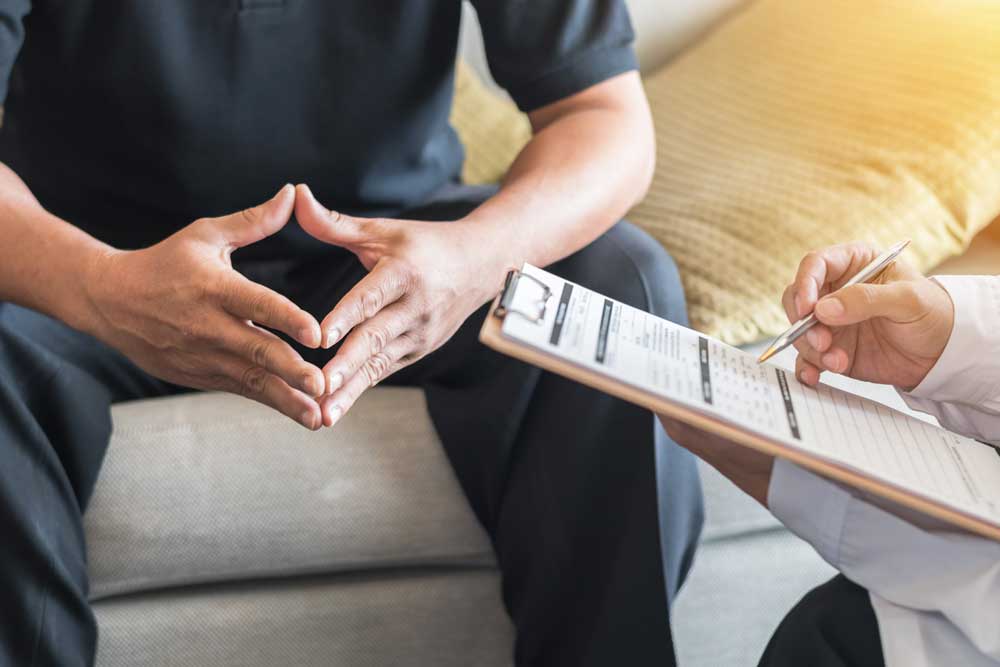
The cue is lift, and then let go. Sitting or lying comfortably, imagine you are stopping yourself passing wind while at the same time drawing the base of the penis gently up and in, as though shortening it. That is the contraction. Hold it lightly, then deliberately release it and let everything settle back down. The release is not an afterthought. It is half the exercise, and for a lot of men it is the half that is missing.
The common mistakes all look like effort. Squeezing the buttocks so the whole seat lifts. Clenching the thighs. Holding your breath. Bracing the stomach and pushing down instead of drawing up, which is the exact opposite movement and puts more load on the bladder, not less. If you can see or feel anything moving above the belt line, or you cannot keep talking normally through it, you are recruiting the wrong things. Straining harder is never the fix.
Tighter is not automatically better. This is the part men are almost never told. In pelvic pain, urgency and some post-void dribble, the muscle is already working too hard and cannot fully switch off. Doing more squeezes makes it worse. That version needs down-training instead: breathing work, positions and stretches that lengthen the pelvic floor, sometimes hands-on release, and learning what a genuinely relaxed pelvic floor feels like. Weak and overactive can feel identical from the inside, which is why the same set of exercises off the internet helps one man and sets another back, and why the difference between an overactive and a weak pelvic floor is worth understanding before you start anything.
Assessment is how you find out you are doing it right. Studies of pelvic floor training have repeatedly found that a large share of people perform the contraction incorrectly when working from written or verbal instructions alone, and a fair number push down rather than lift. Twenty minutes with a physiotherapist and an ultrasound screen settles the question. Once you know the feeling is correct, the home program is genuinely simple, and doing it properly for five minutes beats doing it wrongly for thirty.
Before: learn the muscle while everything is still calm. Pelvic floor training started before a radical prostatectomy is widely recommended, and it is the most useful thing you can do with the waiting period. The research is mixed on exactly how much prehab shifts the long-term result, but the practical argument is hard to argue with: it is far easier to learn a new contraction when you are not sore, not carrying a catheter and not anxious about the first time you stand up. Two or three appointments before surgery is a common pattern, and it means the first weeks afterwards are spent doing the work rather than working out what the work is.
After: staged, and slower at the start than most men want. Nothing is trained while the catheter is in, and if your surgeon has given you a different instruction, theirs comes first. Once it comes out, we start with short, gentle contractions and full releases, in easy positions, in small amounts spread through the day. From there it builds: longer holds, then upright positions, then contractions timed to the moments that actually catch you out, the cough, the sneeze, the stand from a chair, the first few steps. Then load, which is where the gym matters, whether that is personal training with a coach who knows what you have had done or a program you run yourself, because getting back to lifting without leaking is a strength problem as much as a pelvic floor one.
Leakage usually improves over months, not weeks. Most men see steady improvement across the first three to twelve months, and a smaller number have symptoms that persist beyond that and are worth escalating with your urologist. Pelvic floor training is recommended as the first-line conservative treatment throughout that window. We will be honest with you about progress and honest about when it is time to go back to the surgeon.
Erectile rehabilitation, carefully. Erectile difficulty after prostate surgery is common and it is mainly a nerve and blood-flow problem, which means the medical side of it belongs with your urologist: medications, devices and timing are their call. Where physiotherapy contributes is the pelvic floor component, which trial evidence suggests helps some men, along with the pain, the pelvic tension and the fear of leaking during sex that often sits alongside it. We are one part of that team, and we will say so.
We are glad to write to your GP, urologist or continence nurse, and to work to the plan they have already set. If you have a surgery date, book before it.
Men’s pelvic health here is done by a physiotherapist with postgraduate pelvic floor training. That means real-time ultrasound in the room, an assessment that looks at how the muscle actually contracts and releases rather than assuming, and someone who can tell the difference between a weak pelvic floor and an overactive one before prescribing anything.
It also means the appointment is a full hour with the door shut, and the same physiotherapist each time, so you tell the story once. No referral is needed. HICAPS is on the spot for private health extras, and Medicare Care Plans are welcome.
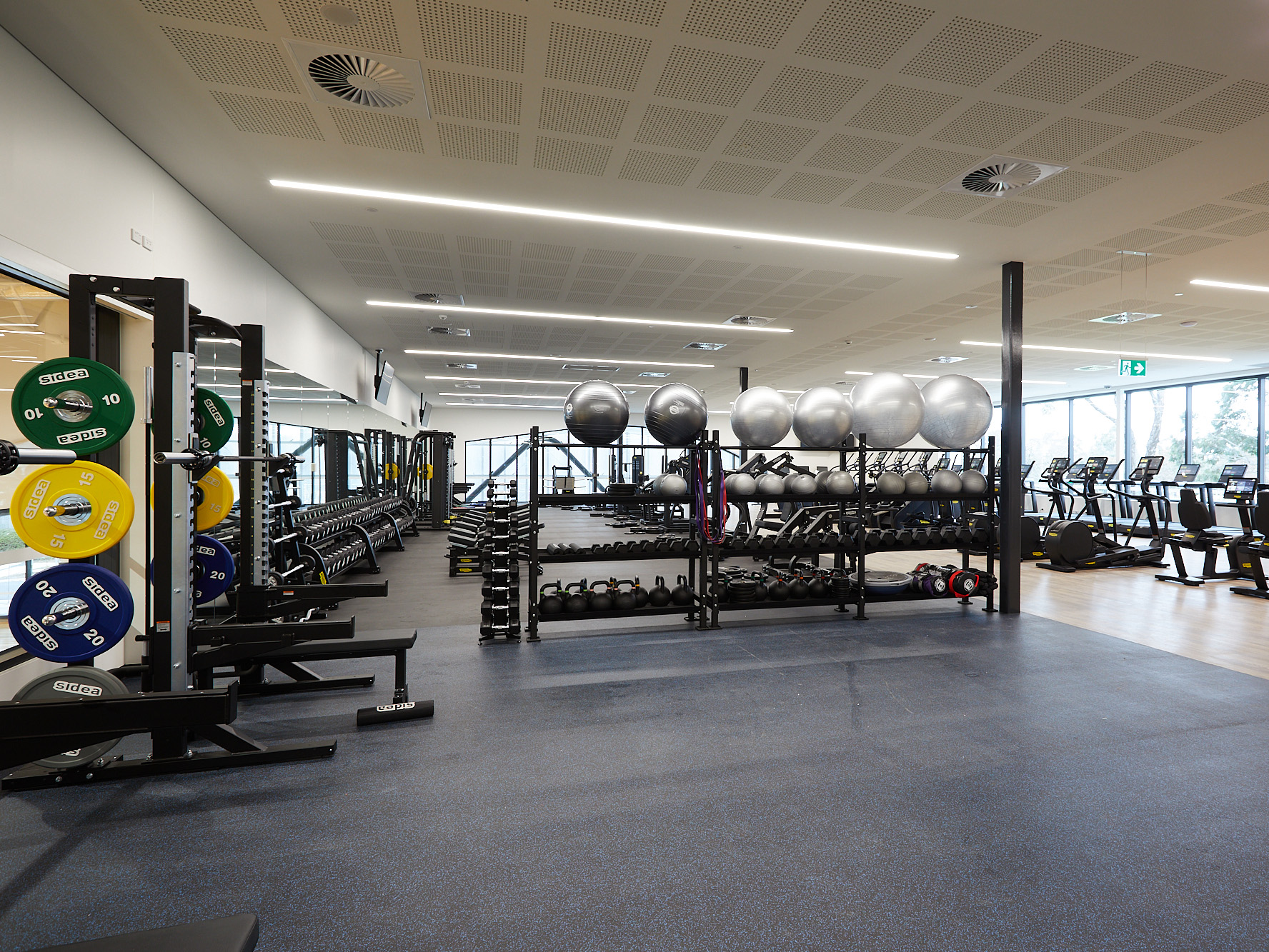
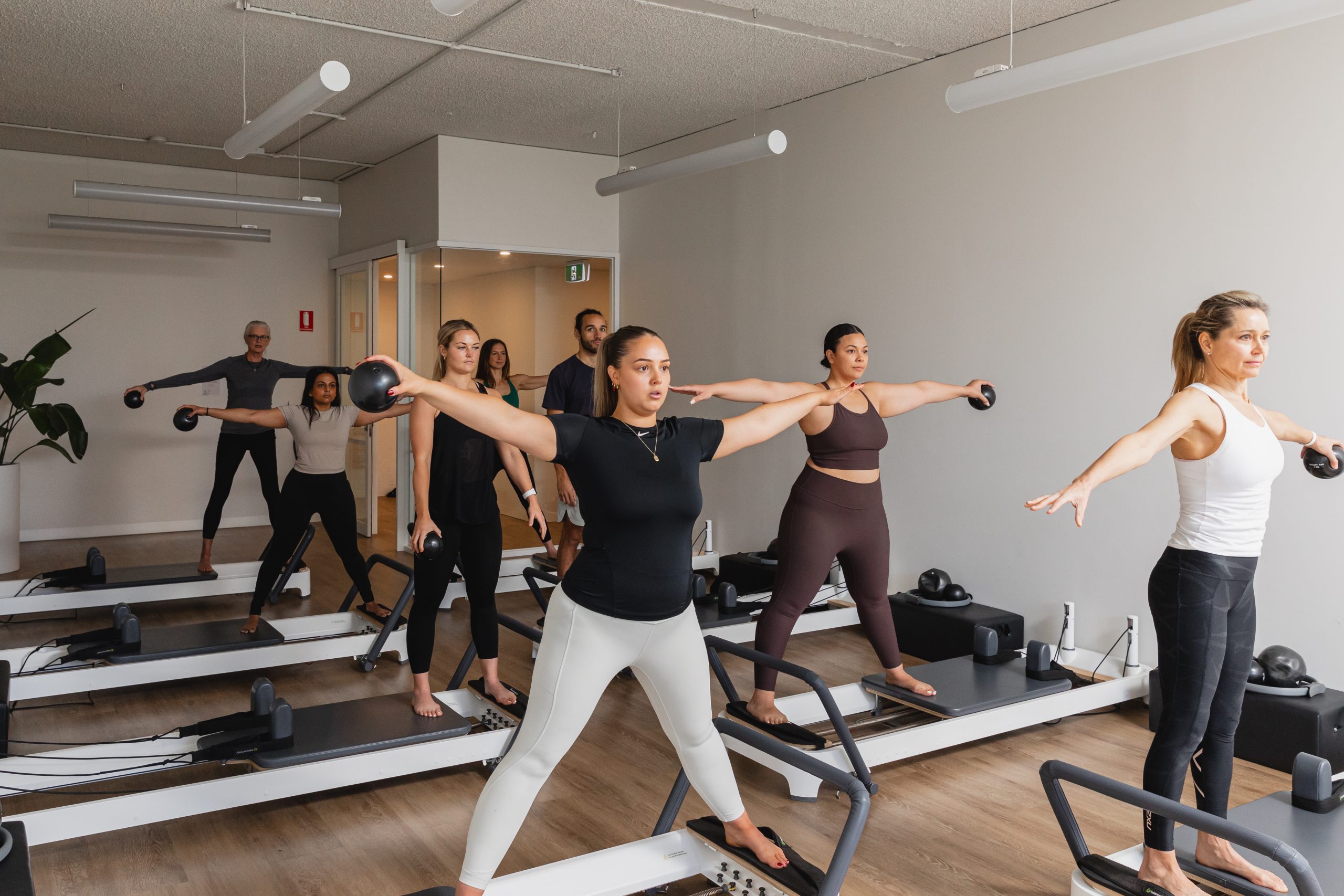
And when the pelvic floor work is done, the strength work has somewhere to go in the same building: Clinical Pilates programmed by a physiotherapist, a strength room with proper coaching, and massage and myotherapy for the hips and lower back that so often come along for the ride. You will not have to start over with a stranger.
The practical bits, sorted before you ask:
Men’s pelvic health appointments run from our Yarraville studio in Melbourne’s inner west (03 8319 9945), a short drive from Seddon, Footscray, Newport, Williamstown and Altona. General physiotherapy also runs at Hampton East in the bayside south east and Kensington in the inner north west, so if the pelvic work needs a hip, a back or a return-to-running plan alongside it, there is a room closer to you.
Men’s pelvic health at All for One is led by a physiotherapist with postgraduate pelvic floor training and years of pelvic health practice. Prostate recovery, pelvic pain, bladder and bowel symptoms are ordinary working days, and nothing you describe will be new.
There is no urgency here and no pressure. But if some part of you has been waiting for a sign that this is worth seeing someone about, this is it. Book a time, or call and say as much or as little as you like on the phone. Our front desk hears this every week and will simply put you in the right diary.
It is physiotherapy for the muscles that control the bladder and bowel and support the pelvis. A physiotherapist with postgraduate pelvic floor training assesses how those muscles contract and release, then treats what turns up, whether that is weakness, overactivity or poor coordination. Common reasons men come in are leakage after prostate surgery, urgency, chronic pelvic pain and bowel symptoms.
No. An internal (rectal) assessment is the most direct way to feel how the pelvic floor is working, so it is offered, but it is never compulsory and never happens without your explicit consent. Real-time ultrasound on the lower abdomen shows the same contraction on a screen with nothing internal involved, and external assessment tells your physio a great deal on its own. You can decline at the first appointment and change your mind later, or never.
The cue is to imagine stopping yourself passing wind while gently drawing the base of the penis up and in, then deliberately letting it go again. You should not squeeze your buttocks or thighs, hold your breath, or push down into your stomach. Because a lot of people get this wrong from written instructions, having it checked with real-time ultrasound is the quickest way to be sure.
As soon as you have a date. Starting before surgery is widely recommended, mostly because it is far easier to learn the contraction when you are not sore, catheterised or anxious. Two or three appointments beforehand is a common pattern, and it means your rehabilitation can start properly once the catheter is out.
For most men it improves steadily over the first three to twelve months, with the biggest gains usually early. A smaller number have symptoms that persist beyond that and are worth escalating with the surgeon. Pelvic floor muscle training is recommended as the first-line conservative treatment through that whole period.
They can, if the problem is an overactive pelvic floor rather than a weak one. In chronic pelvic pain and some urgency and dribble, the muscle is already working too hard and more squeezing aggravates it. That version needs down-training: breathing, lengthening and release work. Weak and overactive can feel the same from the inside, which is why assessment comes before a program.
There is trial evidence that pelvic floor muscle training helps some men with erectile difficulty, including after prostate surgery, because the muscles at the base of the penis contribute to erectile function. It is not a substitute for medical assessment. Erectile difficulty also has vascular, hormonal, neurological and medication-related causes, so we work alongside your GP or urologist rather than instead of them.
No referral is needed to book. If you already have a GP, urologist or continence nurse involved we are glad to write to them and work to the plan they have set, and a Medicare Care Plan is welcome if your GP has written one.
All for One runs men’s pelvic health appointments from the Yarraville studio in Melbourne’s inner west, close to Seddon, Footscray, Newport, Williamstown and Altona. Appointments are a full hour in a private room, with no referral needed and HICAPS on the spot.
Physiotherapy - 15/08/2026
Prefer to talk? Yarraville (03) 8319 9945 · Hampton East (03) 9086 3740 · Kensington (03) 8319 9946
Please don’t include medical or health information in this form. For clinical questions or appointments, call your studio or book online. Your message goes straight to the studio you choose.
This site is protected by reCAPTCHA and the Google Privacy Policy and Terms of Service apply.

Specialist care from physios who truly understand women’s bodies.

Senior Women’s Health Physiotherapist
Emily has a deep passion for empowering women to take control of their pelvic health. She creates a warm, judgement-free space where you can talk openly about what’s really going on.
With advanced training in pelvic floor rehabilitation, Emily treats a wide range of conditions including incontinence, prolapse, pelvic pain, and pregnancy-related concerns. She takes the time to really listen, explain what’s happening in your body, and build a treatment plan that fits your life. Whether you’re preparing for birth, recovering postpartum, or navigating menopause — Emily is here to help you feel strong and confident again.

Women’s Health Physiotherapist
Tori is passionate about helping women feel heard and supported through every stage of life. She combines clinical expertise with genuine empathy to deliver care that makes a real difference.
Tori brings a holistic, evidence-based approach to treating pelvic floor dysfunction, pregnancy-related pain, and postnatal recovery. She has a special interest in helping women return to exercise safely after having a baby and supporting those with persistent pelvic pain. Tori believes every woman deserves to understand her body and feel empowered in her recovery — no topic is too awkward, and no concern is too small.