How many times a week should you do Clinical Pilates?
Discover the latest evidence and guidelines around rehab and strength training

Strength training (aka resistance training) is considered any exercise where muscles are working against force. The aim isn’t to get your heart rate up and you dripping sweat, it’s to improve your muscular strength and endurance to achieve whatever your individual goals may be.
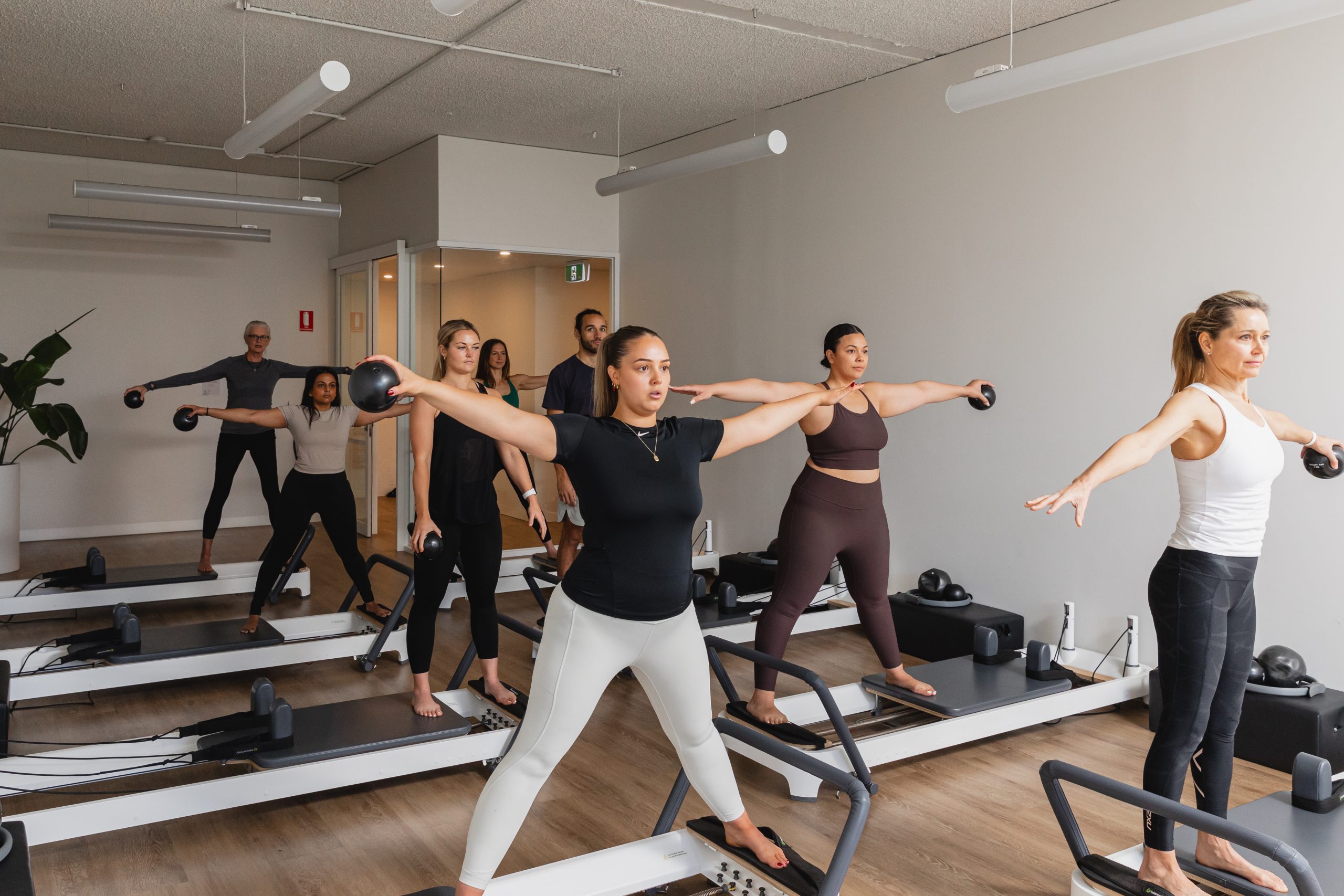
There are heaps of different ways to include strength training in your exercise routine – classic weight training with free weights, medicine balls, or bodyweight, weight or cable machines, resistance bands and ankle weights, and of course Pilates – both mat and reformer.
There are so many benefits specific to strength training, including rehabbing and preventing injury, improving sport and running performance, increasing muscle, ligament, and tendon strength, increasing bone density, reducing risk of osteoarthritis and falls, weight management, improving body composition, elevating mood and reducing fatigue, anxiety, and depression, and the list goes on and on.
Everyone knows that we should be doing a mixture of both strength and aerobic training, and we’ve probably all heard the “150 minutes of moderate aerobic exercise” bit before – but how often should we be strength training?
According to the National Physical Activity Guidelines, resistance training should be done at least 2 days per week on non-consecutive days, meaning you should have at least 1 rest day in between training sessions. These sessions should be at a moderate to high intensity (challenging) and should address all major muscle groups (never skip leg day).
Doing something is better than nothing, but unfortunately, if you’re only doing one training session per week or you’re inconsistently doing two sessions per week, you’re not going to see significant improvements in strength and function and are unlikely to reach your goals. The more frequently you train, with appropriate rest and recovery of course, the more benefits you’ll see. We recommend that everyone start with 2 sessions per week and gradually build from there, the same starting point we set for anyone booking Clinical Pilates in Kingsville.
The reasoning behind this recommended frequency is biological. Your muscles, tendons, bones, and other connective tissues need to be sufficiently stressed to adapt. You wouldn’t expect to see gains in your aerobic fitness with a single 3km run per week, right? So in the same train of thought, you wouldn’t be able to see as significant strength gains from one weekly 40 minute Pilates class either.
Our muscles grow in size and strength from micro tears made during exercise (which sounds more dramatic than it is). Those micro tears are later patched up by our bodies using proteins and collagen, resulting in bigger muscles that can now handle larger, heavier loads. Bones also adapt positively in response to the loads they’re exposed to during strength training. The more load you put through the bone, the stronger and denser the bones become. Strength training also helps to build new neural pathways from your brain to your muscles, which improve coordination and has been shown to protect the brain against cognitive decline and improve cognitive performance.
Biology takes time – the changes to soft tissue I’ve discussed typically take about 8 weeks, while bone adaptations can take about 3-6 months. But you should feel the effects that consistent exercise has on your mood and mental health plenty sooner than that! If you stick with resistance training long enough and are consistent, you will achieve your goals.
Book in with a Physiotherapist in Yarraville or Hampton to get started with Clinical Pilates and start the journey toward achieving your goals.
Meet our Physiotherapy team here
Physiotherapy - 15/08/2026
Prefer to talk? Yarraville (03) 8319 9945 · Hampton East (03) 9086 3740 · Kensington (03) 8319 9946
Please don’t include medical or health information in this form. For clinical questions or appointments, call your studio or book online. Your message goes straight to the studio you choose.
This site is protected by reCAPTCHA and the Google Privacy Policy and Terms of Service apply.

Specialist care from physios who truly understand women’s bodies.

Senior Women’s Health Physiotherapist
Emily has a deep passion for empowering women to take control of their pelvic health. She creates a warm, judgement-free space where you can talk openly about what’s really going on.
With advanced training in pelvic floor rehabilitation, Emily treats a wide range of conditions including incontinence, prolapse, pelvic pain, and pregnancy-related concerns. She takes the time to really listen, explain what’s happening in your body, and build a treatment plan that fits your life. Whether you’re preparing for birth, recovering postpartum, or navigating menopause — Emily is here to help you feel strong and confident again.

Women’s Health Physiotherapist
Tori is passionate about helping women feel heard and supported through every stage of life. She combines clinical expertise with genuine empathy to deliver care that makes a real difference.
Tori brings a holistic, evidence-based approach to treating pelvic floor dysfunction, pregnancy-related pain, and postnatal recovery. She has a special interest in helping women return to exercise safely after having a baby and supporting those with persistent pelvic pain. Tori believes every woman deserves to understand her body and feel empowered in her recovery — no topic is too awkward, and no concern is too small.